








Table of Contents
If you are researching body contouring treatments and searching for “EMS Body Sculpting Machine,” you will find here you are asking a great question. The EMS (Electrical Muscular Stimulation) body sculpting devices have become popular in spas, medical aesthetic clinics, and even as devices for home use — but what are they really doing for themselves?
In short, they mainly work on muscles (and sometimes on fat), not on skin directly. That is, changes in muscle tone, blood circulation, and the structure of two tissues can produce the benefits you see in the appearance of skin. Below, we will explain how EMS works, you will see benefits for your skin, realistic expectations, advantages and disadvantages, prices, safety, and alternatives, so that you can decide whether a body sculpting device by EMS is suitable for your objectives.
What is an EMS Body Sculpture Device?
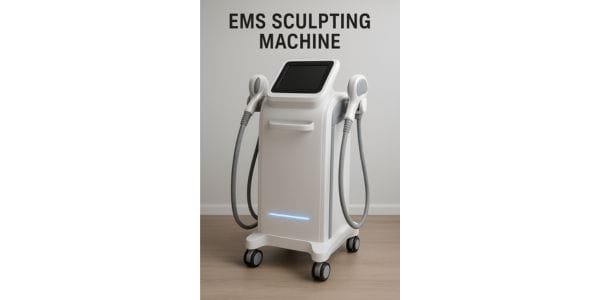
EMS stands for Electrical Muscular Stimulation. In the aesthetic world, EMS body sculpting devices emit high-frequency electrical pulses through applicators placed on the skin surface. These pulses cause involuntary muscle contractions — basically, the device on your muscles “will be exercised” without any effort.
Important difference: some devices marketed as “EMS” are purely muscle stimulators. Others combine EMS with additional technologies (radiofrequency, ultrasonic, cryolipolise, or electromagnetic pulses). A brand known in a category related to Emsculpt®, which uses high-intensity focused electromagnetic energy (HIFEM) instead of traditional low-voltage EMS; The names of the brands and the technologies differ, but the marketing language is often confusing; therefore, check the technical description of the device before purchasing or scheduling.
How EMS affects people — science in simple languages
- The main thing about EMS is the muscle, but as changes in the skin, we can do this indirectly
2. Better tone and muscle volume: firmer and more developed underlying muscles can make overweight people look firmer and smoother — think about how a toned belly looks firmer than a flabby belly.
3. Improved blood circulation: Repeated muscle contractions increase local blood and lymphatic flow. Better circulation can improve your skin’s health and provide a more youthful appearance.
4. Temporary tensor effect: Muscle contraction and slight tension of the superficial tissues can temporarily reduce the appearance of slight sagging or undulations.
5. Indirect collagen stimulation (limited): Traditional EMS, by itself, provides only a moderate stimulus to dermal collagen production. Devices that combine EMS with radiofrequency (RF) or other heat-based technologies more reliably stimulate collagen remodeling and firmer skin.
Advantages of EMS devices for skin sculpting
- Non-invasive and with little recovery time. Most EMS treatments are performed on an isolated patient, do not require incisions, and allow you to return to your normal activities immediately.
- Muscle strengthening without having to go to the academy. Muscle electrostimulation (EMS) induces powerful contractions, difficult to achieve voluntarily; Patients generally report a significant sensation of exercise and measurable muscle tone.
3. Faster treatments. The sessions usually last 20 to 30 minutes, depending on the area treated.
4. Complement fat reduction treatments. EMS can be used in conjunction with fat reduction procedures (such as cryolipolysis) to improve body contour, reducing fat and increasing muscle tone.
5. Minimal immediate side effects. Some muscle pain similar to intense and normal training; bruising and skin irritation are not common with qualified professionals.
6. Accessibility at home. There are EMS devices for home use, for maintenance and convenience (they generally have much lower intensity than professional devices).
Disadvantages and limitations
- Not primarily a skin-tightening treatment. If you have moderate to severe skin laxity, sagging, or excess skin after weight loss, EMS will not replace surgical or more targeted skin-tightening interventions.
2. Results vary and are often temporary. Muscle gains and contour improvements may require maintenance sessions. Without ongoing care or exercise, results can fade.
3. Multiple sessions required. Many protocols recommend a series (4–8 sessions over several weeks) plus periodic maintenance sessions; it’s not a one-and-done fix.
4. Cost can add up. While a single session is affordable to some, the total package cost for meaningful results may be significant (see pricing section below).
5. Contraindications and safety concerns. Not safe for everyone — people with pacemakers or implanted electronic devices, certain heart conditions, pregnancy, and epilepsy are usually excluded.
6. At-home devices are weaker. Consumer gadgets lack the intensity of clinic machines and therefore deliver smaller, slower results.
7. Marketing hype. The aesthetics market is full of broad claims. Some providers or sellers oversell skin benefits or fat-loss promises. Be cautious and ask for clinical data.
What to Expect During a Session
- Consultation first. A qualified provider should assess medical history, skin condition, and goals.
- Prep and placement. Applicators are placed on clean skin over the target muscle groups (abdomen, buttocks, thighs, arms).
- Sensation. You’ll feel intense, rhythmic contractions; most people tolerate it well, but it can be uncomfortable at higher intensities.
- Length. Sessions typically last 20–30 minutes per treatment area.
- Aftercare. Minimal — some light soreness, like after a hard workout, is normal. No special recovery is usually needed.
Safety and Side Effects
EMS treatments performed by trained professionals are generally safe. Possible side effects:
- Muscle soreness or fatigue (most common)
- Mild skin redness or irritation where applicators contact the skin
- Rarely, muscle spasm or cramping
- Very rare complications with poorly calibrated devices or improper use
Always disclose medical implants, a history of seizures, heart conditions, recent surgery, and pregnancy status before treatment.
Pricing — What It Costs (approximate)
Prices vary widely by region, clinic reputation, and whether the device is medical-grade or consumer-grade. Approximate ranges you’ll commonly see in the U.S.:
- In-clinic single session: $250 to $1,000 per session, depending on area and clinic.
- Package deals (common): $1,500 to $6,000 for a multi-session package targeting one or two areas.
- At-home consumer devices: $100 to $600 for small home EMS units (much lower intensity).
- Add-ons or combined treatments: Combining EMS with RF or other modalities raises the price.
Because pricing fluctuates and promotions exist, get a consultation and ask for an itemized quote. Also, ask what maintenance or follow-up sessions are recommended and whether those are included.
Alternatives and Complementary Treatments
If your main concern is skin rather than muscle, consider:
- Radiofrequency (RF) skin tightening — heats dermis to stimulate collagen.
- Microneedling with PRP or RF — for collagen remodeling and texture improvements.
- Laser resurfacing — for pigmentation, texture, and skin tightening.
- Surgical options — for significant excess skin after major weight loss.
- Noninvasive fat-reduction (CoolSculpting, cryolipolysis) — for focal fat pockets.
- Combination approaches — EMS + RF or EMS + topical treatments can give broader results (fat + muscle + skin improvement).
Exercise and nutrition remain the most durable ways to change body composition and skin health. EMS can be a helpful adjunct, not a complete replacement for healthy lifestyle measures.
Is the EMS Sculpting Machine “Good for Your Skin”?
Short answer: It can help your skin look better, but indirectly. If your goal is improving body contour, firming mild skin laxity, or enhancing muscle definition, EMS can be a useful tool in your toolbox. Improved muscle tone and circulation often translate to skin that looks firmer and healthier. However, if you’re seeking significant skin tightening, removal of loose excess skin, or treatment of deep wrinkles, EMS alone is unlikely to deliver the result you want. For skin-specific goals, pair EMS with treatments that target the dermis (RF, lasers, microneedling) or consult a surgical specialist if your concerns are advanced.+