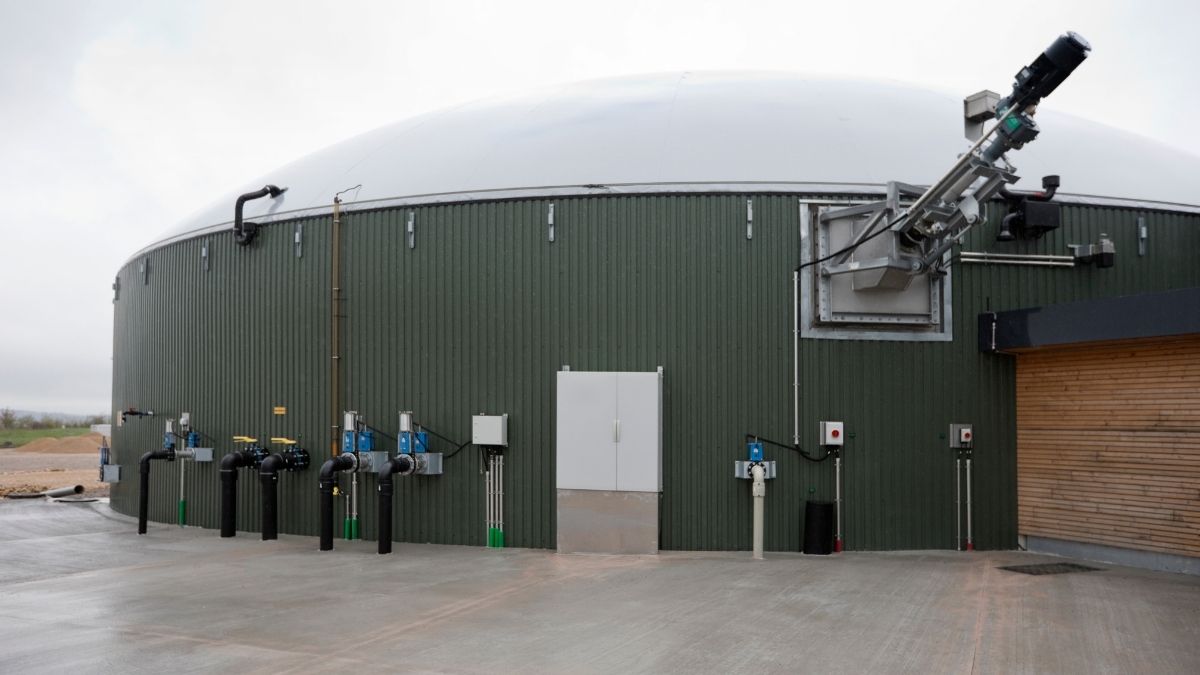
To start a new biogas plant, first prove it is watertight and gas-tight, then fill the digester in one go with fresh cattle dung mixed with water about 1:1 (seeded with digested slurry from a working plant if you can get it), close the gas valve and wait. Gas appears within days, but the first gas is mostly carbon dioxide and air and must be vented unused. Regular daily feeding starts only once the plant is producing a gas that burns steadily.
This page covers commissioning. How the plant is built is on our construction page, and choosing the type and size on biogas generation plants.
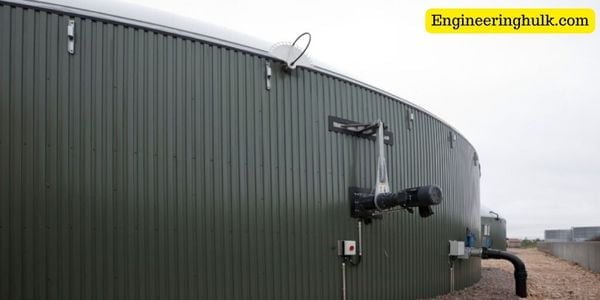
Step 1: Checks before filling
A leak found after filling means emptying the whole digester, cleaning it and re-plastering. Finding it now costs almost nothing. IS 9478:1989 sets these tests:
- Water leakage test: fill the digester with water (or slurry) and watch the level for 24 hours. It must not drop by more than 10 cm.
- Gas leakage test, fixed dome: fit a U-tube manometer (clear plastic tube with water) to the gas outlet, pump air in with a foot pump until the manometer shows a given head, say 30 cm, and leave it for 24 hours. The drop must not be more than 2 to 3 cm. If it is, find the leak with soap solution.
- Gas leakage test, floating drum: the steel drum is checked for leaks at its welded joints, by submerging it or pressurising it with air and watching for bubbles or seepage; mark and repair any leak.
- Pipeline: test every GI or PVC joint, valve and the stove connection with soap solution. Never use a flame.
- Curing and clean-up: the masonry and plaster must be fully cured, and bricks, mortar lumps and tools removed from the digester and inlet.
- Moisture trap: confirm there is a water drain at the lowest point of the gas line.
Step 2: Collect dung and seed
A new plant swallows weeks of dung in one go (see the worked example below), so start stockpiling fresh dung while the plant is being built. Keep it moist and shaded, and keep out sand, straw and stones.
Seeding (inoculation) means adding digested slurry from a working biogas plant. It carries a ready-made population of methanogens, so the new plant skips most of the slow build-up. The GTZ/ISAT Biogas Digest recommends that the first filling be digested slurry from another plant or, failing that, cattle dung, and notes that the age and quantity of the seed strongly affect the start-up. Cattle dung itself already contains methanogens from the animal’s gut, which is why dung plants start more easily than plants fed with kitchen or crop waste.
Never start a plant with dung from animals recently treated with antibiotics, or with water containing detergent, disinfectant or phenyl.
Step 3: Mix the slurry
- Mix fresh dung with water in about a 1:1 ratio by volume (the FAO biogas manual’s figure). Dry dung needs more water, from 1:1.25 up to 1:2.
- The aim is a slurry with 7 to 10% total solids: pourable like thick soup, with no lumps. Too thin and solids settle to the bottom; too thick and gas bubbles cannot escape.
- For the first filling only, the Biogas Digest allows more water than usual so that the digester can be filled completely.
- Remove straw, sand and stones in the mixing tank. Sand settles in the digester and slowly fills it up.
Step 4: Fill to the working level
- Open the gas valve during filling so that the air in the digester can escape.
- Pour the slurry in through the inlet as quickly as the supply allows, ideally over one or two days.
- Fill until the slurry reaches the outlet level, that is, until it just starts to flow into the outlet (displacement) chamber. In a fixed dome plant the slurry must seal the bottom of the dome; in a floating drum plant the drum should float on the slurry.
- Close the gas valve and leave the plant alone. Do not add more feed during the start-up period.
Step 5: First gas, and why it must be vented
With cattle dung, gas can start within a day or two, according to the Biogas Digest, but the start-up (breaking-in) gas is poor:
- more than 60% carbon dioxide, so it will not burn or burns weakly
- very bad smelling
- mixed with the air that was trapped in the gas space
That last point is the danger. A mixture of about 5 to 12% biogas in air is explosive, and the first gas in a newly filled plant can sit in that range. The Biogas Digest advises venting the first two gas-holder fillings unused for safety. Open the valve outdoors, away from the kitchen and any flame, and let the gas escape. Never test how full a new plant is with a match.
After that, try the gas at the stove. When it burns with a steady blue flame, the plant is commissioned. A weak or yellow flame at first is normal and improves as the methane share rises. How long this takes depends on seeding and temperature: in warm weather with good seed it can be a week or so; unseeded plants in cool weather can take several weeks (typical ranges; there is no fixed figure).
Step 6: Start daily feeding
- The Biogas Digest advises holding off extra feed until the process is stable. The large mass of first-fill dung then gives a burst of gas; start regular daily feeding once gas production settles back to the expected level.
- Feed the rated daily quantity, same time every day, at the same 1:1 mix. IS 9478 gives 25 kg of dung per day for each m3 of plant rating (50 kg for a 2 m3 plant).
- An equal volume of digested slurry flows out of the outlet each day. Use it as manure or compost it.
- Do not overfeed to “catch up”. Overfeeding washes out methanogens and turns the digester sour.
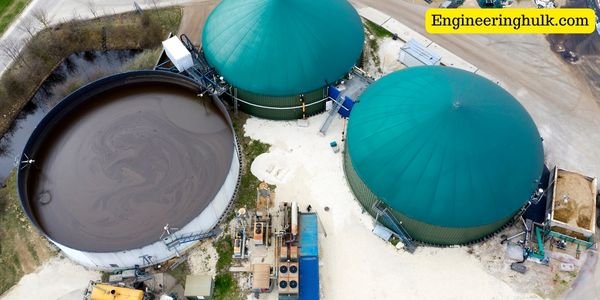
Temperature: why plants slow down in winter
Household plants are unheated, so they work at soil temperature in the mesophilic range (20 to 40 °C). The FAO manual puts the optimum at about 35 °C, satisfactory production at 25 to 30 °C, and says production virtually stops when the temperature falls to about 10 °C. Methanogens also dislike sudden change: the Biogas Digest gives about 1 °C per hour as the limit for mesophilic plants.
This is why IS 9478 designs plants for 30, 40 or 55 days of retention depending on the winter temperature. Starting a new plant in summer is easier than in winter. In cold months:
- mix the daily feed with lukewarm water (the FAO manual mentions warm water and covering the plant)
- cover the dome or drum area with straw, or a plastic sheet to trap solar heat
- expect and accept less gas; do not respond by overfeeding
Worked example: first fill and daily feed for a 2 m3 plant
Given: a 2 m3/day plant designed for 40 days’ retention (IS 9478 class for 20 to 30 °C winters). Daily feed 50 kg of dung (IS 9478). Slurry density taken as about 1,000 kg/m3, so 1 kg of slurry ≈ 1 L. Fresh dung volume is taken as roughly 1 L per kg (an approximation).
Step 1, working volume of the digester
- Daily slurry = 50 kg dung + 50 L water ≈ 100 L = 0.1 m3
- Working volume = 0.1 m3/day × 40 days = 4 m3
Step 2, first fill at 1:1
- Dung = 4 / 2 = 2 m3, about 2,000 kg; water = 2 m3 (2,000 L)
- At the normal feed rate of 50 kg/day that is 2,000 / 50 = 40 days’ dung. Hence the advice to stockpile during construction.
Step 3, with seed and extra dilution
- Suppose 0.5 m3 of digested slurry is available from a neighbour’s plant. Remaining volume = 4 − 0.5 = 3.5 m3.
- At 1:1: dung = 3.5 / 2 = 1.75 m3 (about 1,750 kg).
- Diluted 1:1.5 for the first fill: dung = 3.5 / 2.5 = 1.4 m3 (about 1,400 kg), saving 350 kg of dung, or 7 days of collection.
Step 4, venting the first gas
- A 2 m3 KVIC plant has a 1.10 m3 gas holder (IS 9478). Venting the first two fillings releases about 2 × 1.10 = 2.2 m3 of gas unused.
Step 5, daily feed after start-up
- 50 kg dung + 50 L water = about 100 L of slurry per day in, and about 100 L of digested slurry out.
Troubleshooting a new plant
| Symptom | Likely cause | What to do |
|---|---|---|
| No gas after a few weeks | Gas leak; plant not filled to working level; very cold; no seed and slow start | Repeat the soap and manometer tests; top up to the outlet level; add digested slurry as seed; wait for warmer weather |
| Gas comes but will not burn | Start-up gas, mostly CO2 and air | Keep venting outdoors; wait for methane content to rise |
| Flame flickers or goes out | Water collected in the gas pipe; low pressure | Drain the moisture trap; check pipe slope |
| Gas bubbling from the inlet or outlet but little at the stove | Thick scum layer blocking gas release (energypedia) | Break the scum; rotate the drum on a KVIC plant; remove scum by hand if needed; keep straw out of the feed |
| Sour smell, falling gas, slurry pH below about 6.5 | Overfeeding or feed that ferments too fast; acids build up faster than methanogens use them | Stop feeding for a few days; add digested slurry or plain dung to rebalance; lime only as a last resort (Biogas Digest) |
| Gas production falls suddenly | Toxins: detergent, disinfectant, antibiotics, pesticide | Find and stop the source; the plant may need partial re-seeding |
| Gas pressure drops fast in a fixed dome | Leak in the dome plaster or gas line | Soap-test all joints; dome leaks may need the plant emptied and re-plastered |
Safety during commissioning
- No smoking or open flame near the plant, the inlet or the outlet, especially during the first weeks.
- Vent start-up gas outdoors, never inside the kitchen.
- Never climb into a digester, even an empty one, until it has been ventilated for a long time. Biogas displaces oxygen, CO2 collects near the floor, and hydrogen sulphide is toxic.
- Cover the inlet and outlet chambers so children and animals cannot fall in.
For the wider picture see biomass energy, the biodigester article, the Ministry of New & Renewable Energy (MNRE), Government of India and IEA – Bioenergy.
FAQs
What is the ratio of dung to water in a biogas plant?
About 1:1 by volume for fresh cattle dung, giving a slurry with 7 to 10% total solids. Dry dung needs more water, up to about 1:2. For the very first filling a little extra water is acceptable so the digester fills completely.
How long does a new biogas plant take to produce gas?
Gas can start within a day or two with cattle dung, but the early gas is mostly carbon dioxide and air and will not burn well. Usable gas typically takes one to a few weeks, faster with digested slurry as seed and in warm weather.
Why should the first gas from a biogas plant be released?
The first gas contains more than 60% carbon dioxide and is mixed with the air that was in the gas space. A mixture of about 5 to 12% biogas in air can explode, so the first two gas-holder fillings are vented outdoors unused.
Can I add more dung every day while the plant is starting?
No. After the first filling, hold off extra feed until the gas burns steadily and production settles, then start the normal daily feed. Overfeeding during start-up makes the digester sour.
Why does my biogas plant give less gas in winter?
The bacteria work best at about 35 degrees Celsius and slow down sharply as the slurry cools, almost stopping near 10 degrees. Feeding with lukewarm water and covering the plant helps, but some winter drop is normal.
Related Topics on EngineeringHulk
- 👉 Biogas Generation Plants
- 👉 Constructional Details of a Biogas Plant
- 👉 Biomass Conversion Technologies
- 👉 Biomass Energy: Definition, Benefits & Working
- 👉 Prospects of Geothermal Energy in India
- 👉 Water Quality Parameters — pH, DO, BOD, COD Explained
- 👉 Wastewater Treatment — Primary, Secondary & Tertiary
- 👉 Activated Sludge Process & Trickling Filters
- 👉 Solid Waste Management — Collection, Disposal & Treatment
- 👉 Water Treatment — Coagulation, Sedimentation, Filtration &
Hello I am starting a bio digester in an IBC container. To start i used a 3:1 ration of water to cow manure. We placed these materials in another tank to be able to monitor the ph level. One question i still have is, how much of the Bio digester needs to be filled with the initial starting Sludge.