 EngineeringHulk
- Home
- Blog
- Automobile Engineering
- Check Engine Light Flashing: What It Means, Causes and What to Do Now
Check Engine Light Flashing: What It Means, Causes and What to Do Now

On this page
A flashing check engine light almost always means the engine is misfiring badly enough to damage the catalytic converter. Unburnt fuel is going into the exhaust and burning inside the converter, overheating it. Slow down, avoid hard acceleration and get the car to a workshop soon. If the car is shaking hard, losing power, overheating or smells strongly of fuel, pull over safely and stop the engine.

Flashing vs steady check engine light
The check engine light (officially the malfunction indicator lamp, MIL) is controlled by the engine computer’s on-board diagnostics (OBD). It has two very different warnings:
| Steady light | Flashing light | |
|---|---|---|
| What it means | A fault that affects emissions has been detected and stored | A misfire severe enough to damage the catalytic converter is happening right now |
| Typical causes | Loose fuel cap, faulty sensor, small vacuum leak, ageing catalytic converter | Failed spark plug or ignition coil, injector fault, badly lean mixture, low compression |
| Urgency | Get it checked within days | Act now: drive gently and only to a workshop, or stop |
| Risk if ignored | Worse fuel economy, a small fault growing | Melted or clogged catalytic converter, engine damage |
Since April 2023, new petrol and diesel vehicles sold in India must meet BS-VI Phase 2 rules, which include real-time on-board emission monitoring, so the light is more sensitive on newer cars than on older ones.
What to do immediately when the light flashes
- Ease off the accelerator. Misfires and converter heat both rise with load. Drive slowly and smoothly; do not overtake or climb steep hills if you can avoid it.
- Check the other warning lights and gauges. If the temperature gauge is high, the oil pressure light is on, or the engine is knocking, stop as soon as it is safe and switch off.
- Watch for fire risk. A strong raw-fuel smell or smoke from under the car means stop, switch off and get out.
- Do not tow a trailer or carry heavy loads until the fault is fixed.
- Get the codes read. Any workshop, or a cheap OBD-II Bluetooth scanner with a phone app, can read the stored trouble codes in a minute.
- If the light stops flashing and stays steady, the misfire has eased (often it flashes only under load). The fault is still there; get it checked soon.
Why a flashing light is urgent: the catalytic converter
The catalytic converter is a ceramic honeycomb coated with platinum, palladium and rhodium that turns carbon monoxide, unburnt hydrocarbons and nitrogen oxides into carbon dioxide, water and nitrogen. It normally works at a few hundred degrees Celsius. When a cylinder misfires, its fuel and air pass into the exhaust unburnt and then burn inside the converter. That extra heat can push the honeycomb far above its normal temperature until it cracks or melts, blocking the exhaust. Replacing a converter usually costs far more than the spark plug or coil that caused the problem.
Common causes of a flashing check engine light
1. Faulty spark plug
Worn or fouled plugs cannot fire reliably. Symptoms: rough idle, hesitation, poor pick-up. Many cars need new plugs at intervals listed in the service manual, often between 20,000 and 100,000 km depending on plug type.
2. Failed ignition coil or plug lead
Most modern petrol engines have one coil per cylinder. A cracked or failing coil kills the spark to that cylinder. A mechanic can swap coils between cylinders: if the misfire moves with the coil, the coil is at fault.
3. Fuel injector problem
A clogged or stuck injector starves or floods one cylinder. Dirty fuel and long intervals without service make this more likely.
4. Lean mixture or vacuum leak
A split intake hose, leaking intake gasket, weak fuel pump or clogged filter lets the mixture run too lean to burn properly, causing misfires on several cylinders.
5. Low compression
Burnt valves, a blown head gasket or worn piston rings mean the cylinder cannot compress the mixture enough to fire. A compression or leak-down test confirms it. This is the most expensive cause. The components of an IC engine explains how valves, rings and the head gasket work.
6. Sensor or wiring faults
A failed crankshaft or camshaft position sensor, or damaged wiring (rats chewing wires is a common problem in Indian cities), can upset spark and fuel timing.
7. Water or bad fuel
Driving through deep water, or fuel contaminated with water, can cause sudden misfires.
OBD codes you are likely to see
| Code | Meaning | First things to check |
|---|---|---|
| P0300 | Random or multiple-cylinder misfire | Vacuum leaks, fuel pressure, all plugs, bad fuel |
| P0301-P0308 | Misfire in cylinder 1 to 8 (last digit = cylinder) | That cylinder’s plug, coil and injector |
| P0171 / P0174 | System too lean (bank 1 / bank 2) | Intake leaks, MAF sensor, fuel pump |
| P0420 | Catalytic converter efficiency below threshold | Converter condition (often after earlier misfires), oxygen sensors |
| P0335 / P0340 | Crankshaft / camshaft position sensor circuit | Sensor, wiring and connector |
A code tells you where to look, not always which part to replace. Check the simple things (plugs, coils, connectors) before buying expensive parts.
Approximate repair costs in India
Costs vary a lot by car model, city and whether parts are genuine, so use these only as rough orders of magnitude and ask for a written estimate:
| Repair | Relative cost |
|---|---|
| Spark plug set | Low: usually the cheapest fix |
| Single ignition coil | Low to moderate |
| Injector cleaning or replacement | Moderate |
| Oxygen sensor | Moderate |
| Catalytic converter | High: often many times the cost of plugs and a coil |
| Head gasket or valve work | High |
The pattern is the point: fixing a misfire quickly is cheap; letting it destroy the converter is not.
How to prevent misfires
- Replace spark plugs at the interval in your owner’s manual.
- Use fuel from reliable stations and do not run the tank nearly empty regularly.
- Replace air and fuel filters on schedule.
- Avoid driving through deep water.
- Protect wiring from rodents (rodent-repellent tape or sprays are widely used).
- Get a steady check engine light checked early, before it turns into a flashing one.
If the car also shifts roughly or struggles to move off, the problem may be in the driveline rather than the engine; see parts of a car transmission.
FAQs
Can I drive with a flashing check engine light?
Only gently and only as far as a workshop, ideally a short distance. If the car shakes badly, loses power or overheats, stop and arrange towing, because continued driving can destroy the catalytic converter.
What is the most common cause of a flashing check engine light?
An engine misfire, most often from a worn spark plug or a failed ignition coil.
Will a loose fuel cap make the check engine light flash?
No. A loose fuel cap can turn on a steady light through the evaporative emission system, but a flashing light points to an active misfire.
Can a flashing check engine light fix itself?
It may stop flashing when the misfire eases, for example at light load, but the cause remains. Get the codes read and the fault repaired.
How do I read the check engine code myself?
Plug an OBD-II scanner into the diagnostic port, usually under the dashboard near the steering column, switch on the ignition and read the stored codes on the scanner or phone app.
Keep reading

What Is a Clutch? Parts, Working and Types of Clutches
A clutch connects and disconnects the engine from the gearbox. Clutch parts, how it works, 8 types (single-plate, multi-plate, cone, centrifugal) and faults.

Components of the Internal Combustion Engine (IC Engine): Parts, Functions and Materials
Main components of an IC engine with function and material of each: block, head, piston, rings, connecting rod, crankshaft, valves, plus worked examples.
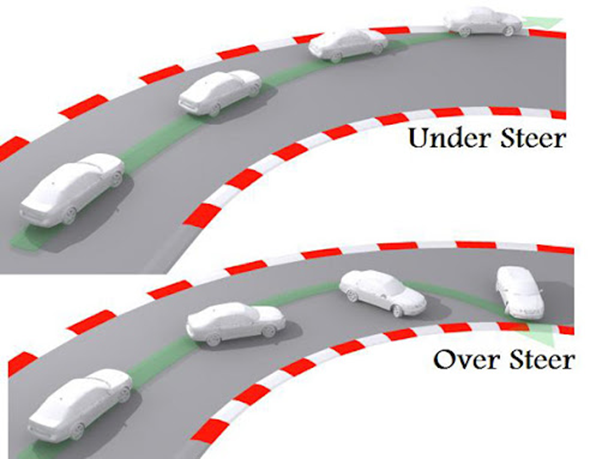
Oversteer and Understeer: Slip Angles, Causes and Correction
Understeer means the front slip angle exceeds the rear and the car runs wide; oversteer is the reverse. Causes, understeer gradient K and fixes.

OTT Full Form: What Over-The-Top Means and How OTT Streaming Works
The full form of OTT is Over-The-Top. Here is what the phrase means, how OTT streaming actually works, platform types, and India's OTT rules in 2026.
SSVM Full Form: What Saraswati Shishu Vidya Mandir Means
SSVM full form is Saraswati Shishu Vidya Mandir, a Vidya Bharati school name used across India. Here is who runs these schools and what else SSVM means.
How Tyres Affect Vehicle Performance: Rolling Resistance, Grip, Braking and Fuel Economy
How tyres affect vehicle and engine performance: rolling resistance, fuel use, grip, braking distance, pressure, tread depth, labels and when to replace.