 EngineeringHulk
- Home
- Blog
- Admissions & Careers
- SSVM Full Form: What Saraswati Shishu Vidya Mandir Means
SSVM Full Form: What Saraswati Shishu Vidya Mandir Means
On this page
- What does SSVM stand for?
- Who runs Saraswati Shishu Vidya Mandir schools?
- History: from one school in 1952 to a national network
- Shishu Mandir, Vidya Mandir and Shishu Vatika: the naming pattern
- Which board are SSVM schools affiliated to?
- What the curriculum emphasises
- What is SSVM college?
- Common confusions worth clearing up
- References
- FAQs
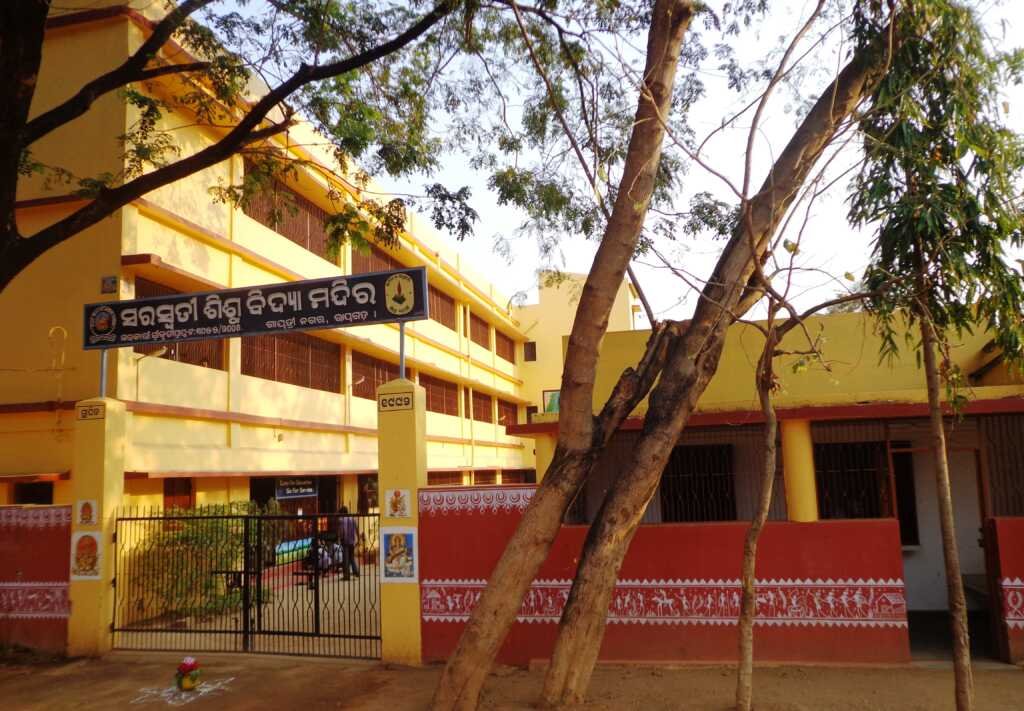
SSVM most often stands for Saraswati Shishu Vidya Mandir, a school name used by thousands of separate schools across India that are run under Vidya Bharati Akhil Bharatiya Shiksha Sansthan. It is a network name, not one institution: there is no single SSVM campus, no single founding year and no single student roll. The same abbreviation is also used by unrelated bodies, most notably SSVM Institutions in Coimbatore, where SSVM expands to Shree Saraswathi Vidhya Mandheer. This page sorts out which is which.
What does SSVM stand for?
Three expansions account for almost every search for this abbreviation in India.
| Expansion | What it refers to | Where you find it |
|---|---|---|
| Saraswati Shishu Vidya Mandir | A school name used across a very large network of schools run under Vidya Bharati. Often shortened further to Saraswati Shishu Mandir. | Uttar Pradesh, Bihar, Jharkhand, Madhya Pradesh, Chhattisgarh, Odisha, Rajasthan, Haryana and most other states |
| Shree Saraswathi Vidhya Mandheer | SSVM Institutions, a private group of about 20 school campuses founded in 1998 by Dr Manimekalai Mohan. It has no connection with the Vidya Bharati network. | Coimbatore, Mettupalayam, Nambiyur and Tiruppur in Tamil Nadu |
| Saraswati Vidya Mandir | The senior-school version of the same Vidya Bharati naming pattern, frequently abbreviated SVM but sometimes written SSVM in casual use. | Across north and central India, often as “Inter College” |
So if you saw SSVM on a school signboard in Ranchi or Gorakhpur, you were almost certainly looking at a Saraswati Shishu Vidya Mandir. If you saw it in Coimbatore, you were looking at a completely different organisation that happens to share the initials.
Who runs Saraswati Shishu Vidya Mandir schools?
Saraswati Shishu Vidya Mandir schools operate under Vidya Bharati Akhil Bharatiya Shiksha Sansthan, the apex educational body constituted in 1977 with its registered office in Lucknow and functional headquarters in Delhi. Vidya Bharati is the educational wing of the Rashtriya Swayamsevak Sangh, and it is generally described as the largest non-governmental school network in the country.
The important structural point for anyone researching a specific school: Vidya Bharati is a coordinating body, not an owner-operator in the way a corporate school chain is. Individual schools are run by state-level and district-level committees, usually registered as their own societies or trusts. That is why two schools with the same name in two districts can differ in fees, classes offered, board affiliation and quality, and why there is no central admission portal for them.
History: from one school in 1952 to a national network
- 1952 – the first Saraswati Shishu Mandir opens in Gorakhpur, Uttar Pradesh. Nanaji Deshmukh is credited with its establishment.
- 1958 – a state-level Shishu Shiksha Prabandh Samiti is formed in Uttar Pradesh to manage the growing number of schools.
- 1977 – Vidya Bharati Akhil Bharatiya Shiksha Sansthan is constituted as the all-India apex body coordinating the state committees.
- Early 1990s – the network is reported at around 5,000 schools.
- 2002-2003 – reported figures of roughly 17,000 schools and about 2.2 million students, along with teacher training colleges and degree colleges.
- 2019 onward – published figures put the network at roughly 12,000 to 13,000 formal schools plus about 11,000 informal centres, teaching in the region of 3 million to 3.4 million students.
Those totals vary noticeably between sources and reporting years, partly because formal schools, single-teacher schools and sanskar kendras are counted differently from one report to the next. Treat any single number you see as approximate and check the year it applies to.
Shishu Mandir, Vidya Mandir and Shishu Vatika: the naming pattern
The names are not random. They broadly track the age group a school serves, although the exact classes differ from state to state and school to school:
- Shishu Vatika – the pre-primary stage, roughly equivalent to nursery and kindergarten.
- Saraswati Shishu Mandir or Saraswati Shishu Vidya Mandir – primary and upper primary, commonly up to class 5 or class 8.
- Saraswati Vidya Mandir or Saraswati Vidyalaya – secondary and senior secondary. In Uttar Pradesh and Bihar these are often named “Inter College”, which in local usage means a school running up to class 12.
A school that starts as a Shishu Mandir and later adds higher classes is frequently renamed a Vidya Mandir, which is one reason the two names appear interchangeably in the same town.
Which board are SSVM schools affiliated to?
There is no single answer, because affiliation is taken school by school. Most Vidya Bharati schools are affiliated either to the Central Board of Secondary Education or to their state board, such as the UP Board, Bihar School Examination Board or the Jharkhand Academic Council. A few are affiliated to the state Sanskrit or other specialised boards.
If you need to confirm the board for one particular school, do it at the source rather than by assumption:
- Ask the school office for its affiliation number and the board name.
- For CBSE, search that affiliation number on the CBSE affiliated-schools directory at cbse.gov.in.
- For a state board, check the board’s own recognised-schools list for the district.
- Confirm the classes the school is recognised up to, which is often lower than the classes it advertises.
What the curriculum emphasises
Alongside the standard board syllabus in language, mathematics, science and social science, Vidya Bharati schools add a set of subjects that give the network its distinct character:
- Sanskrit, usually taught from the primary classes rather than as an optional third language later.
- Moral and value education, taught as a timetabled subject.
- Physical education and yoga, including exercises and in some schools traditional martial arts.
- Music and singing, with daily prayer assemblies.
- Vedic mathematics in many schools, as a supplement to the regular mathematics syllabus.
The organisation describes its own approach as education rooted in Indian culture, aimed at character formation alongside academic work. Teachers in these schools are addressed as Acharya and Didi rather than sir and madam, and students as bhaiya and bahan, which is a small but consistent marker of a Vidya Bharati school.
What is SSVM college?
“SSVM college” is a common search, and it usually means one of two things rather than a degree college by that exact name.
- In Uttar Pradesh, Bihar and Jharkhand, “college” in a school name usually means an Inter College, that is, a school running classes up to 12. Saraswati Vidya Mandir Inter Colleges exist in many districts, and each is a separate institution.
- In Tamil Nadu, searches often lead to the Coimbatore SSVM Institutions group, which runs schools from kindergarten to grade 12 under CBSE, Cambridge IGCSE, IB and NIOS, along with SSVM Prepversity, a coaching arm for competitive examinations. It is a school group, not a degree-awarding college.
Vidya Bharati does separately run teacher training colleges and a number of degree colleges, but those carry their own institution names and are not called SSVM.
Common confusions worth clearing up
- SSVM is not one school. Any claim that gives a single founding year, a single city and a single student count for “Saraswati Shishu Vidya Mandir” is describing one particular branch at best, and is inaccurate as a description of the name.
- There is no central SSVM admissions process. Admission, fees and the academic calendar are decided locally by the managing committee of each school.
- Fees are not uniform. These schools are usually low-fee compared with private English-medium chains in the same town, but the actual amount varies by state and district.
- The Coimbatore SSVM is unrelated. Shared initials only; different founders, different management, different curricula.
References
- Vidya Bharati Akhil Bhartiya Shiksha Sansthan, About Vidya Bharati – founding in Gorakhpur in 1952 and constitution of the apex body in 1977.
- Vidya Bharati – network size, school types and curriculum, with the years those figures apply to.
- SSVM Institutions, Coimbatore – the unrelated Tamil Nadu group.
- Central Board of Secondary Education, list of affiliated schools, cbse.gov.in.
FAQs
What is the full form of SSVM?
SSVM usually stands for Saraswati Shishu Vidya Mandir, a school name used across a large network of schools run under Vidya Bharati Akhil Bharatiya Shiksha Sansthan. In Coimbatore, Tamil Nadu, the same initials belong to SSVM Institutions, where SSVM stands for Shree Saraswathi Vidhya Mandheer.
Who runs Saraswati Shishu Vidya Mandir schools?
They operate under Vidya Bharati Akhil Bharatiya Shiksha Sansthan, constituted in 1977, with its registered office in Lucknow and functional headquarters in Delhi. Vidya Bharati is the educational wing of the Rashtriya Swayamsevak Sangh. Individual schools are managed by state and district level committees, so each school is a separate institution.
When and where was the first Saraswati Shishu Mandir started?
The first Saraswati Shishu Mandir opened in Gorakhpur, Uttar Pradesh, in 1952, credited to Nanaji Deshmukh. A state-level management committee followed in 1958, and the national apex body Vidya Bharati was constituted in 1977.
Are SSVM schools affiliated to CBSE?
Some are and some are not. Affiliation is decided school by school: most are affiliated either to CBSE or to their state board, such as the UP Board or Bihar School Examination Board. Ask the school for its affiliation number and verify it on the CBSE or state board directory.
What is the difference between Shishu Mandir and Vidya Mandir?
The names broadly mark the stage a school serves. Shishu Vatika is pre-primary, a Saraswati Shishu Mandir usually covers primary and upper primary up to class 5 or 8, and a Saraswati Vidya Mandir covers secondary and senior secondary classes. A Shishu Mandir that adds higher classes is often renamed a Vidya Mandir.
Keep reading

What Is UGC? University Grants Commission: Full Form, Functions and Current Status
UGC full form is University Grants Commission, India's statutory higher education regulator since 1956. Its functions, 2(f) and 12B, NET and the VBSA Bill.

OTT Full Form: What Over-The-Top Means and How OTT Streaming Works
The full form of OTT is Over-The-Top. Here is what the phrase means, how OTT streaming actually works, platform types, and India's OTT rules in 2026.

VISA Full Form: Meaning, Origin, Types of Visa and Visa vs Passport
VISA full form is often given as Visitors International Stay Admission, but visa is not an acronym. It comes from Latin charta visa, a paper that was seen.

TRYSEM Full Form: Training of Rural Youth for Self Employment (1979-1999)
TRYSEM full form is Training of Rural Youth for Self Employment, launched 15 August 1979, merged into SGSY in 1999 and now replaced by DAY-NRLM.
District Education Office (DEO): Full Form, Role, Functions and Hierarchy
DEO stands for District Education Officer. What the district education office does, where it sits in the hierarchy and how to approach it.
SSC CHSL Full Form: Meaning, Posts, Eligibility and Exam Pattern
SSC CHSL full form is Staff Selection Commission Combined Higher Secondary Level. Posts (LDC, JSA, DEO), eligibility, Tier 1 and Tier 2 pattern and pay levels.