 EngineeringHulk
- Home
- Blog
- Manufacturing Engineering
- Types of Hammers and Their Uses: Weights, Parts and How to Choose
Types of Hammers and Their Uses: Weights, Parts and How to Choose
On this page
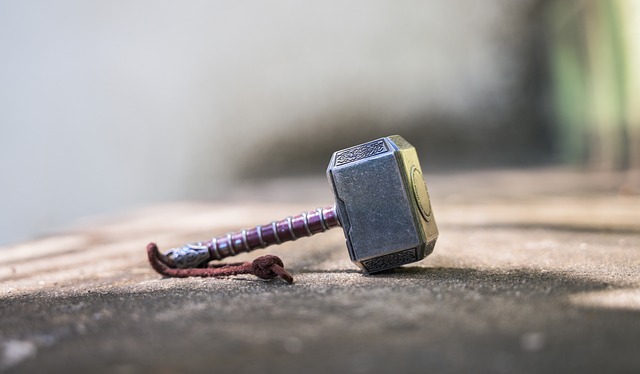
A hammer is a striking tool with a weighted head on a handle, and the types differ mainly in the shape of the head and its mass: a ball peen hammer of 110 g to 1 kg for metalwork, a claw hammer of about 450 to 680 g for nails, a club hammer of 1 to 1.8 kg for chisels, and a sledge hammer of 2 to 10 kg for demolition. Head shape decides what the hammer can do; head weight and handle length decide how much energy each blow delivers. In India the common workshop hammers are covered by IS 841, which tabulates nominal masses from 100 g engineer’s hammers up to 10.5 kg sledges.
Parts of a hammer
- Face: the striking surface. It is usually slightly crowned, not dead flat, so a nail can be driven home without the rim bruising the timber. The face is hardened and tempered to roughly 50 to 58 HRC while the middle of the head is left softer, so the head cannot split.
- Cheek: the side of the head between face and eye. It carries the size stamp and is never meant to be struck with.
- Eye: the tapered hole that takes the handle. The handle is driven in and then expanded by a wooden wedge across the grain and one or two steel wedges along it.
- Peen (pein): the working end opposite the face, shaped as a ball, a cross wedge or a straight wedge. It is used for shaping metal, closing rivets and starting small nails.
- Claw: the split, curved or straight fork found on carpentry hammers, used to lever nails out.
- Neck and handle: hickory or ash wood absorbs shock best and can be replaced cheaply, which is why IS 4953 still covers wooden hammer handles. Tubular steel and fibreglass handles with moulded rubber grips will not loosen or rot, and a one-piece forged steel hammer cannot lose its head at all, though it passes more vibration into the wrist.
The hardening matters. A hammer face is deliberately hard and the interior is not, and that difference comes from controlled heating and cooling. The opposite treatment, annealing, softens steel, so a hammer that has been through a fire has annealed itself and is scrap.
Types of hammers and their uses: the chart
| Type of hammer | Head weight | Main use |
|---|---|---|
| Ball peen (engineer’s, machinist’s) | 110 g to 1 kg (common 340 to 500 g) | General fitting shop work: striking cold chisels and punches, closing and shaping rivet heads, peening metal. The ball end rounds over rivets and works hollows into sheet. |
| Cross peen | 250 g to 1 kg | The wedge peen lies across the handle. Used to start small nails held between the fingers and to draw metal out sideways in smithing. |
| Cross peen pin hammer | 55 to 110 g | A light version for panel pins, tacks and cabinet work where a full hammer would split the timber. |
| Straight peen | 250 g to 1 kg (sledge versions 2 to 6 kg) | Peen runs in line with the handle, so it draws metal out along the length of the workpiece. Forge and blacksmith use. |
| Club or lump hammer | 1 to 1.8 kg | A short-handled double-faced hammer for cold chisels, bolsters, masonry nails and light demolition. Both faces strike. |
| Sledge hammer | 2 to 10 kg (IS 841 lists up to 10.5 kg) | Two-handed heavy striking: breaking concrete and brickwork, driving stakes and posts, forging under the striker’s blow. |
| Engineer’s hammer (double-face, short sledge) | 1 to 2 kg | Heavy one-handed striking in the fitting shop: seating shafts, straightening bar, driving large drifts. |
| Claw hammer (curved claw) | 450 to 680 g | The standard carpentry hammer. Drives nails with the face and pulls them with the curved claw, which gives good leverage against the timber. |
| Framing hammer (straight or rip claw) | 570 g to 1 kg | Structural carpentry and formwork. Heavier head, longer handle and often a milled waffle face that grips the nail head instead of skidding off it. |
| Wooden mallet | 200 to 900 g | Driving wood chisels and gouges without splitting their handles, and tapping joints together in joinery. |
| Rubber mallet | 350 to 900 g | Seating assemblies, tapping tiles and paving blocks, bending sheet metal over a former without marking it. |
| Rawhide mallet | 200 to 900 g | Sheet metal work where the surface must not be stretched or bruised, and press-fit assembly of finished parts. |
| Dead blow hammer | 500 g to 2 kg | A hollow head part filled with steel shot or sand. The shot lands a fraction later than the head, so the blow does not bounce back. Used for shifting machine parts, alignment work and body repair in tight spaces. |
| Soft-face hammer (copper and hide, or copper and nylon) | 500 g to 2.5 kg | Replaceable faces let the same hammer drive hardened parts, bearings, gears and shafts without burring or chipping them. |
| Welder’s chipping hammer | 250 to 500 g | Chisel end and cross peen end for removing slag from stick welds. The spring-coil handle keeps hot metal away from the hand. |
| Scaling hammer | 500 to 800 g (IS 841) | Chipping hard scale and rust from boiler tubes, tanks and ship plate. |
| Brick or mason’s hammer | 450 to 900 g | A square face for driving and a chisel end for cutting and dressing brick and block. |
| Stone breaker’s hammer | 1 to 8 kg (IS 841) | Breaking stone and hard aggregate on site and in quarry work. |
| Spiking and keying hammer | 1.5 to 4 kg (IS 841) | Railway track work: driving dog spikes and keys into sleepers and chairs. |
| Tack hammer | 100 to 200 g | Upholstery. One end is often magnetised so a tack can be set with one hand and then driven. |
| Electrician’s hammer | 450 to 680 g | A long, slim neck reaches into junction boxes and between studs. The handle is insulated. |
Choosing the right hammer weight
Two rules cover most of it: use the lightest hammer that does the job in a reasonable number of blows, and match the hammer to the tool or fastener rather than to your enthusiasm. A 340 g ball peen on a 12 mm cold chisel is right; a 1.8 kg club hammer on the same chisel mushrooms its head and tires your arm in a minute. Hitting a 10 mm masonry nail with a 200 g pin hammer just bends it.
Rough guide for an Indian workshop:
- Punches, small chisels, riveting: 300 to 500 g ball peen.
- Nails in timber, general carpentry: 450 to 570 g claw.
- Cold chisel through 6 mm plate, masonry bolsters: 1 to 1.8 kg club.
- Breaking a brick wall or concrete: 3 to 5 kg sledge.
- Driving a finished shaft or bearing: soft-face or dead blow, never a steel face.
How weight and handle length change the blow
The energy delivered is the kinetic energy of the head at impact:
E = ½ m v², with m in kg, v in m/s and E in joules.
Worked example. A 450 g claw hammer swung so the head reaches 6 m/s delivers
E = 0.5 × 0.45 × 6² = 0.5 × 0.45 × 36 = 8.1 J
Swing the same hammer harder, at 9 m/s, and you get
E = 0.5 × 0.45 × 9² = 18.2 J
The head is unchanged and the speed rose by half, yet the energy more than doubled, because velocity is squared and mass is not. A 1.8 kg club hammer at that first, slower 6 m/s gives 0.5 × 1.8 × 36 = 32.4 J, four times the light hammer, exactly in proportion to its mass.
Handle length feeds straight into that squared term. The head travels on an arc, so its speed is v = ω r, where r is the distance from your shoulder or wrist to the head. Double the effective radius at the same swing rate and the head moves twice as fast, giving four times the energy. That is why a sledge hammer has a 900 mm handle and a pin hammer has a 250 mm one, and why cutting down a long handle to make a hammer “easier to control” throws away most of its usefulness.
The practical limit is accuracy. Past a certain mass and length you stop hitting what you aimed at, and a miss delivers zero joules to the work.
Hammer safety and inspection
- Check for a mushroomed face. Repeated striking spreads the rim of the face into a thin lip that can break off at high speed. Grind the lip back to a clean chamfer of about 3 mm, or scrap the head. The same applies to the struck end of chisels and punches.
- Never strike a hardened face against hardened steel. Two hardened surfaces meeting at speed can both chip and throw fragments. Use a soft-face hammer, a copper drift or a brass punch against hardened parts, and never hammer one hammer with another.
- Test the head for looseness before every use. Tap the handle end on the bench; a loose head rings differently and moves. Re-wedge it properly. Soaking a loose wooden handle in water is a bad workshop habit: it swells for a day, then rots the wood and leaves the head looser than before.
- Wear eye protection, especially on chipping, scaling and concrete breaking. Most hammer injuries in workshops are eye injuries from flying chips, not crushed thumbs.
- Use the face, not the cheek, and reject split, chipped or oily handles. Side-striking cracks heads, and an oily grip leaves the hand mid-swing.
- Do not use a claw hammer on a cold chisel, and do not use any hammer as a pry bar. Its face is heat-treated for nail heads, and levering on the claw beyond nail pulling snaps it.
Care and storage
Wipe the head dry after use and oil steel faces lightly if the shop is humid, but keep oil off the handle. Rub raw linseed oil into wooden handles two or three times a year so they do not shrink in the eye. Store hammers in a rack rather than loose in a drawer, where faces pick up nicks and then transfer those marks to your work. Rubber and rawhide mallets harden with age and heat, so keep them out of direct sun.
Reference
- IS 841:1983, Indian Standard specification for steel hammers, and IS 4953:1973, wooden handles for hand hammers, Bureau of Indian Standards.
- NPTEL, Manufacturing Processes, bench work and fitting shop practice.
FAQs
What are the main types of hammers and their uses?
The commonest are the claw hammer for driving and pulling nails, the ball peen hammer for chisels, punches and riveting, the cross peen for starting small nails and drawing out metal, the club hammer for cold chisels and masonry, the sledge hammer for demolition, mallets and soft-face hammers for assembly without marking parts, and the dead blow hammer for blows that do not bounce back.
What weight of hammer should I use?
Use the lightest hammer that finishes the job in a reasonable number of blows. Roughly: 300 to 500 g ball peen for punches and riveting, 450 to 570 g claw for carpentry, 1 to 1.8 kg club for cold chisels and bolsters, and 3 to 5 kg sledge for breaking concrete or brickwork. Finished or hardened parts get a soft-face or dead blow hammer instead.
Why is a ball peen hammer used in workshops?
Its face is made to strike hardened tools such as cold chisels, centre punches and drifts, and its ball end closes rivet heads and works hollows into sheet metal. Sizes of 340 to 500 g cover most fitting shop tasks, and IS 841 lists engineer’s ball pein hammers from 100 g upwards.
What is a dead blow hammer and how is it different from a mallet?
A dead blow hammer has a hollow head partly filled with loose steel shot or sand. On impact the shot arrives a moment after the head and cancels the rebound, so all the energy goes into the work and the hammer does not bounce. A mallet has a solid rubber, wooden or rawhide head; it protects the surface but still rebounds.
Why should a mushroomed hammer face never be used?
The spread rim is thin, work hardened and brittle, and a piece of it can break off at the speed of the swing and fly into an eye. Grind the edge back to a clean chamfer of about 3 mm before use, or replace the head. The same check applies to the struck ends of chisels and punches.
Related Topics on EngineeringHulk
Keep reading
Types of Valves and Their Uses: Advantages and Disadvantages
Types of valves and their uses: gate, globe, ball, butterfly, plug, diaphragm, check, safety, solenoid and control valves, with a Kv sizing worked example.
Types of Grinding Machines and Their Uses
Types of grinding machines: surface, cylindrical, centreless, internal, tool and cutter, jig, gear and CNC grinders, with tolerances and wheel codes.

Types of Bolts: Parts of a Bolt, Common Bolt Kinds, Grades and Uses
Types of bolts with their parts: hex, carriage, flange, U, J, eye, T-head, stud and more. Thread sizes, 8.8 and 10.9 grades, and a worked M12 load example.
Types of Bearings and Their Uses: Ball, Roller, Thrust and Plain Bearings
Types of bearings and their uses: ball, roller, needle, tapered, thrust and plain bearings, a comparison table, the 6205 code and a worked L10 example.

Rapid Prototyping: Types, Methods, Steps and How to Choose
Rapid prototyping explained: prototype types by fidelity, methods from 3D printing to CNC, vacuum casting and sheet metal, the steps, and how to choose.

Gate Valve: Working, Parts, Types, Standards and Applications
A gate valve is an isolation valve for fully open or fully closed duty. Its parts, working, wedge and stem types, standards and why never to throttle it.