📌 Quick Answer
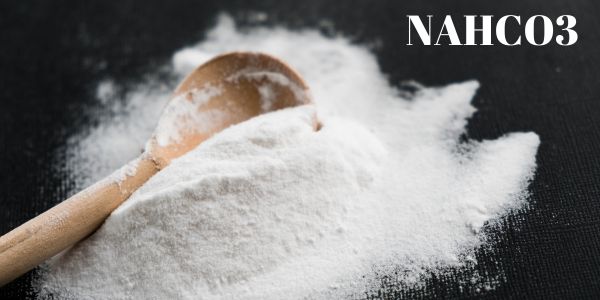
NaHCO3 is the chemical formula of sodium bicarbonate, commonly known as baking soda or sodium hydrogen carbonate.
It is a white, crystalline, mildly alkaline solid that is soluble in water and decomposes on heating to give sodium carbonate, water and carbon dioxide.
🔹 Key Takeaways
- Formula NaHCO3; molar mass about 84 g/mol; common name baking soda.
- It is a weak base (mildly alkaline) and is soluble in water.
- On heating it decomposes: 2 NaHCO3 -> Na2CO3 + H2O + CO2.
- Used in baking, as an antacid, in fire extinguishers and as a mild cleaner.
What Is NaHCO3?
NaHCO3 is the formula for sodium bicarbonate (sodium hydrogen carbonate), widely known as baking soda. It is a white crystalline powder, slightly alkaline (basic), soluble in water and non-toxic, which is why it is so common in the kitchen and in medicine.
Properties and Key Reaction
Sodium bicarbonate is a weak base with a molar mass of about 84 g/mol. Its most useful property is thermal decomposition: when heated above about 80°C it breaks down as 2 NaHCO3 → Na2CO3 + H2O + CO2. The carbon dioxide released is what makes cakes and bread rise. It also reacts with acids to release CO2, which is the basis of its use in antacids and fire extinguishers.
Common Uses
- Baking: as a leavening agent that releases CO2 to make dough rise.
- Antacid: neutralises excess stomach acid.
- Fire extinguishers: dry-powder and soda-acid extinguishers release CO2.
- Cleaning and deodorising: a mild abrasive and odour absorber.
Frequently Asked Questions
What is the chemical name of NaHCO3?
It is sodium bicarbonate (also called sodium hydrogen carbonate), commonly known as baking soda.
What happens when NaHCO3 is heated?
It decomposes into sodium carbonate, water and carbon dioxide: 2 NaHCO3 -> Na2CO3 + H2O + CO2.
Is NaHCO3 an acid or a base?
It is a mild base (weakly alkaline), which is why a solution of baking soda feels slightly slippery and neutralises acids.
What are the main uses of sodium bicarbonate?
Baking (as a leavening agent), as an antacid, in dry-powder fire extinguishers, and as a mild cleaning and deodorising agent.
1 thought on “NAHCO3 – Properties, Uses, and Benefits”