📌 Quick Answer
Cornering power is the lateral (sideways) force a tyre generates per degree of slip angle when a vehicle turns – it measures how strongly a tyre resists sliding outward in a corner.
Higher cornering power means better grip and more responsive, stable handling; it depends on tyre design, load, inflation, road surface, and speed.
🔹 Key Takeaways
- Cornering power = lateral force produced per unit slip angle (N per degree).
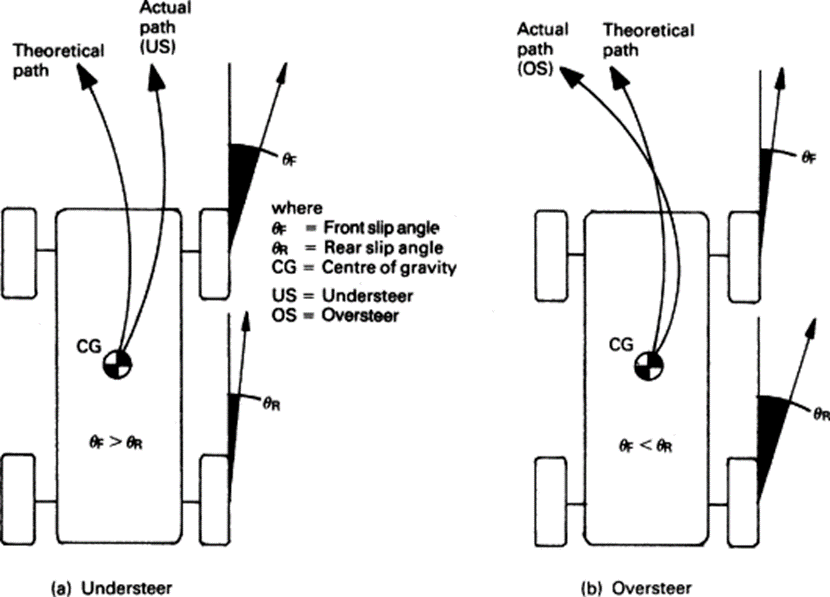
- Slip angle is the difference between where a tyre points and where it actually travels.
- It governs how well a car holds a line through a corner without skidding.
- Affected by tyre construction, vertical load, inflation pressure, camber, and road grip.
- Closely linked to the suspension system, which controls tyre contact and load transfer.
What Is Cornering Power?
Cornering power (or cornering stiffness) is the lateral force a tyre develops for each degree of slip angle as a vehicle negotiates a turn. The slip angle is the small angle between the direction a tyre is pointing and the direction it is actually rolling. A tyre with high cornering power produces a large sideways force for a small slip angle, so the car turns crisply and grips well.
It is one of the most important measures of a vehicle’s handling, working hand in hand with the suspension system that keeps the tyres firmly on the road.
Factors Affecting Cornering Power
- Tyre design and compound – wider tyres and grippier rubber give more cornering force.
- Vertical load – more weight on a tyre increases cornering force, but only up to a point.
- Inflation pressure – correct pressure maximises the contact patch and cornering power.
- Camber angle – a small negative camber improves grip when cornering.
- Road surface and speed – a dry, rough surface grips better than a wet or smooth one.
Why Cornering Power Matters
Cornering power determines a vehicle’s stability, steering response, and safe cornering speed. Too little leads to understeer or skidding; balanced cornering power between front and rear axles gives predictable, safe handling. Engineers tune tyres, suspension, and weight distribution together to achieve it – which also relies on a responsive braking system for total control.
Frequently Asked Questions
What is cornering power in an automobile?
The lateral force a tyre generates per degree of slip angle when the vehicle turns – a measure of how strongly the tyre resists sliding sideways in a corner.
What is slip angle?
The angle between the direction a tyre is pointing and the direction it is actually moving. Cornering force builds up with slip angle until the tyre reaches its grip limit.
What factors affect cornering power?
Tyre design and compound, vertical load, inflation pressure, camber angle, and the road surface and speed all influence a tyre’s cornering power.
Related Topics on EngineeringHulk
- 👉 https://engineeringhulk.com/suspension-system-in-automobile-engineering/
- 👉 https://engineeringhulk.com/hydraulic-brake-system-in-automobile-engineering/
- 👉 https://engineeringhulk.com/what-is-a-clutch-its-types-applications-working/
- 👉 https://engineeringhulk.com/chassis-frame-definition-types-materials-explained/