 EngineeringHulk
- Home
- Blog
- Science & Maths
- Butanoic Acid (C4H8O2): Structure, Properties, Reactions and Uses
Butanoic Acid (C4H8O2): Structure, Properties, Reactions and Uses
On this page
Butanoic acid, also called butyric acid, is a four-carbon carboxylic acid with the formula C4H8O2 (CH3CH2CH2COOH) and a molar mass of 88.11 g/mol. It is a colourless, oily liquid that boils at about 164 °C, mixes fully with water, and smells strongly of rancid butter. It is a weak acid with a pKa of 4.82.
Structure of butanoic acid
The molecule is a straight chain of three carbons (a propyl group, CH3CH2CH2–) joined to a carboxyl group (–COOH). Counting the carboxyl carbon, there are four carbons in total, which is where the “but-” in the IUPAC name comes from.
- Molecular formula: C4H8O2
- Condensed formula: CH3CH2CH2COOH, also written C3H7COOH
- IUPAC name: butanoic acid
- Common name: butyric acid, from the Latin butyrum (butter)
- Functional group: carboxylic acid
Molar mass of butanoic acid
Using standard atomic masses (C = 12.011, H = 1.008, O = 15.999):
- Carbon: 4 × 12.011 = 48.044
- Hydrogen: 8 × 1.008 = 8.064
- Oxygen: 2 × 15.999 = 31.998
Total = 48.044 + 8.064 + 31.998 = 88.106 ≈ 88.11 g/mol. By mass, that is 54.5% carbon, 9.2% hydrogen and 36.3% oxygen.
Physical properties
| Property | Value |
|---|---|
| Appearance | Colourless, oily liquid |
| Odour | Rancid butter, vomit, sweat; detectable at very low concentrations |
| Molar mass | 88.11 g/mol |
| Melting point | About −5 °C (sources range from −5 to −8 °C) |
| Boiling point | About 164 °C |
| Density | About 0.96 g/cm³ at 20 °C |
| Solubility in water | Miscible (mixes in any proportion) |
| Acid strength | pKa 4.82 (weak acid) |
| Flash point | About 72 °C |
Why the boiling point is so high: butanoic acid (88 g/mol) boils at 164 °C, while butan-1-ol (74 g/mol) boils at 118 °C and pentane (72 g/mol) at 36 °C. Carboxylic acids pair up into hydrogen-bonded dimers, so each “unit” moving into the vapour is effectively twice as heavy and held more tightly.
Why it mixes with water: the –COOH group hydrogen-bonds to water. From pentanoic acid upward, the longer non-polar chain wins and solubility drops sharply.
Chemical properties and reactions
1. Acidic nature
In water it partly ionises: CH3CH2CH2COOH ⇌ CH3CH2CH2COO⁻ + H⁺. With a pKa of 4.82, it is slightly weaker than ethanoic (acetic) acid, whose pKa is 4.76. The longer alkyl chain pushes a little electron density toward the carboxylate, making it marginally less stable.
2. Reaction with bases
CH3CH2CH2COOH + NaOH → CH3CH2CH2COONa + H2O
The product is sodium butanoate (sodium butyrate), a salt used in biology research and animal feed.
3. Reaction with carbonates and bicarbonates
CH3CH2CH2COOH + NaHCO3 → CH3CH2CH2COONa + H2O + CO2
The fizzing of CO2 is the standard school test for a carboxylic acid. More on the reagent in sodium bicarbonate (NaHCO3).
4. Esterification
Heated with ethanol and a few drops of concentrated sulphuric acid:
CH3CH2CH2COOH + C2H5OH ⇌ CH3CH2CH2COOC2H5 + H2O
The ester, ethyl butanoate, smells of pineapple. This is the neat surprise of butyric acid chemistry: the acid stinks, its esters smell like fruit.
5. Reduction
Lithium aluminium hydride (LiAlH4) reduces it to butan-1-ol, CH3CH2CH2CH2OH.
Isomers of C4H8O2
Six common compounds share the formula C4H8O2. Two are acids and four are esters, which is why C4H8O2 on its own does not identify butanoic acid.
| Compound | Formula | Type |
|---|---|---|
| Butanoic acid | CH3CH2CH2COOH | Acid |
| 2-Methylpropanoic acid (isobutyric acid) | (CH3)2CHCOOH | Acid |
| Ethyl ethanoate (ethyl acetate) | CH3COOC2H5 | Ester |
| Methyl propanoate | CH3CH2COOCH3 | Ester |
| Propyl methanoate | HCOOCH2CH2CH3 | Ester |
| Isopropyl methanoate | HCOOCH(CH3)2 | Ester |
Acids and esters with the same formula are functional isomers. The acid pair (butanoic and 2-methylpropanoic) are chain isomers.
Where butanoic acid comes from
- Butter and dairy: butterfat holds butyric acid bound as triglycerides. When butter goes rancid, the fat breaks down and releases the free acid, which is what you smell. It is also part of the flavour of Parmesan and other aged cheeses.
- Your gut: bacteria in the large intestine ferment dietary fibre into short-chain fatty acids, mainly acetate, propionate and butyrate. Butyrate is a main energy source for the cells lining the colon.
- Industry: most commercial butanoic acid is made by oxidising butanal (butyraldehyde), which itself comes from propene. Fermentation of sugars by Clostridium bacteria is a smaller, bio-based route.
- Laboratory: oxidation of butan-1-ol with acidified potassium dichromate.
Uses of butanoic acid
- Flavour and fragrance esters: ethyl butanoate (pineapple), methyl butanoate (apple) and pentyl butanoate (apricot/pear) are used in food flavourings and perfumes.
- Plastics: cellulose acetate butyrate (CAB) is a tough, clear plastic used for tool handles, eyeglass frames and coatings.
- Animal feed: butyrate salts and glycerides are added to poultry and pig feed to support gut health.
- Fishing bait: its smell attracts carp and some other fish.
- Chemical intermediate: used to make butyrate esters, salts and pharmaceutical intermediates.
Safety
Concentrated butanoic acid is corrosive. It can burn skin and eyes, and its vapour irritates the nose and throat. Handle it in a fume hood with gloves and goggles, keep it away from strong oxidisers and bases, and store it closed: even a small spill makes a room smell for hours. Always follow the supplier’s safety data sheet. Physical and safety data can be cross-checked on PubChem: butyric acid.
FAQs
What is the formula of butanoic acid?
The molecular formula is C4H8O2 and the condensed structural formula is CH3CH2CH2COOH (or C3H7COOH).
Is butanoic acid the same as butyric acid?
Yes. Butanoic acid is the IUPAC name and butyric acid is the common name for the same compound.
What is the molar mass of butanoic acid?
88.11 g/mol: 4 carbons (48.04) + 8 hydrogens (8.06) + 2 oxygens (32.00).
Why does butanoic acid smell bad?
It is volatile enough to reach the nose and our smell receptors are very sensitive to it. It is the compound behind the smell of rancid butter and part of the smell of vomit and sweat.
Is butanoic acid a strong or weak acid?
Weak. Its pKa is 4.82, so only a small fraction of molecules ionise in water, similar to acetic acid.
Related Topics on EngineeringHulk
Keep reading
NaHCO3 (Sodium Bicarbonate): Chemical Name, Properties and Uses
NaHCO3 is sodium bicarbonate (baking soda), molar mass 84.007 g/mol. Its properties, pH, thermal decomposition equation, acid reactions and main uses.

N-Phenylethanamide (Acetanilide): Structure, Preparation and Uses
N-phenylethanamide is acetanilide, C8H9NO, molar mass 135.16 g/mol. Structure, properties, preparation from aniline, reactions and uses for students.
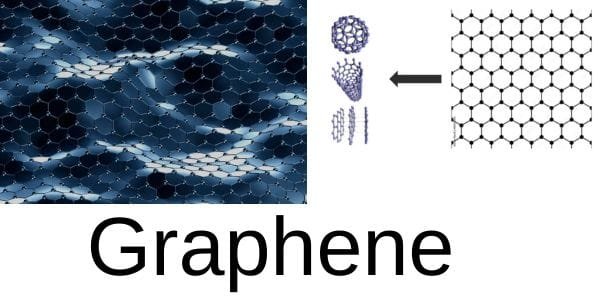
What Is Graphene? Structure, Properties, Production and Uses
Graphene is one layer of sp2 carbon atoms in a honeycomb lattice. Its structure in numbers, measured properties, how it is made and where it is used.
Supplementary Angles: Definition, Properties and Examples
Supplementary angles are two angles that add up to 180°. Definition, linear pairs, properties, supplementary vs complementary, and solved examples.
Molar Mass of NaOH (Sodium Hydroxide): Calculation and Uses
Molar mass of NaOH is 40.00 g/mol (Na 22.99 + O 16.00 + H 1.008). Step-by-step calculation, gram-mole examples, solution prep and equivalent weight.

What Is a Co-Prime Number? Definition, Examples and Properties
Co-prime numbers have no common factor except 1, so their HCF is 1. Learn how to check any pair, key properties, co-prime vs prime, and worked examples.