 EngineeringHulk
- Home
- Blog
- Electrical & Electronics
- RTU (Remote Terminal Unit): Definition, Functions, Parts and RTU vs PLC
RTU (Remote Terminal Unit): Definition, Functions, Parts and RTU vs PLC
On this page
RTU stands for Remote Terminal Unit. It is a microprocessor-based field device in a SCADA system that reads sensors and meters at an unmanned remote site, time-stamps and stores the readings, sends them to the master station over a communication link, and drives output relays when the master sends a control command. A single RTU typically handles 16 to 256 I/O points, runs off a 24 V, 48 V or 110 V DC station battery, and works from about -40 °C to +70 °C without air conditioning.
One quick note before we go on: in engineering and SCADA work, RTU always means Remote Terminal Unit. Students in Rajasthan also use RTU for Rajasthan Technical University, Kota, which is a separate thing entirely and not covered here.
What is a Remote Terminal Unit (RTU)?
A Remote Terminal Unit is the eyes, ears and hands of a SCADA system at the far end of a wire. Field equipment cannot talk to a control room computer on its own. A current transformer gives an analogue signal, a circuit breaker gives a dry contact, a flow meter gives a pulse train. The RTU turns all of that into digital telemetry the master station can read, and turns the master’s instructions back into contact closures that operate real hardware.
Four things define it. It is remote, sitting at a substation or pump house with nobody present for weeks. It is a terminal, because field wiring lands on it. It is autonomous, so it keeps scanning and buffering when the link drops. And it is a protocol translator between the field devices below and the master above.
Where the RTU sits in a SCADA system
A SCADA system has four layers, and the RTU is the third one down:
- Field level: sensors, transducers, energy meters, circuit breakers, valves, pumps, motors.
- Control level: RTUs, PLCs and intelligent electronic devices (IEDs) wired to that field equipment.
- Communication level: fibre, leased line, radio, GPRS/4G, VSAT or power line carrier.
- Supervisory level: the master station, historian, HMI screens and the control room operators.
The master station never polls a sensor. It polls the RTU, which has already scanned, scaled and time-stamped everything, so one poll returns a compact block instead of hundreds of separate readings. That is what makes SCADA workable over a 9600 bps radio link covering 200 km of distribution network.
What are the functions of an RTU?
- Data acquisition. Scan analogue inputs (4-20 mA, 0-10 V, 1-5 V) and digital status inputs, typically every 1 to 100 ms.
- Scaling. Convert the raw ADC count into engineering units, so the master receives 11.2 kV, not a 14-bit number.
- Time-stamping and sequence of events (SOE). Tag every status change to 1 ms using a GPS clock, IRIG-B input or SNTP. After a trip, the SOE log shows which protection operated first. This is the single most valuable thing an RTU does in a substation.
- Local storage. Buffer readings in non-volatile memory during an outage and replay them when the link returns, leaving no hole in the historian.
- Control output. Execute select-before-operate commands to trip a breaker, start a pump or change a tap, with a watchdog that cancels the command if confirmation never arrives.
- Local automation. Run simple logic alone, such as closing a backup source after a delay if the main feeder stays dead.
- Protocol conversion and self-diagnostics. Collect Modbus from meters downstream and publish DNP3 or IEC 60870-5-104 upstream, while reporting its own battery voltage, board health and door alarms as points.
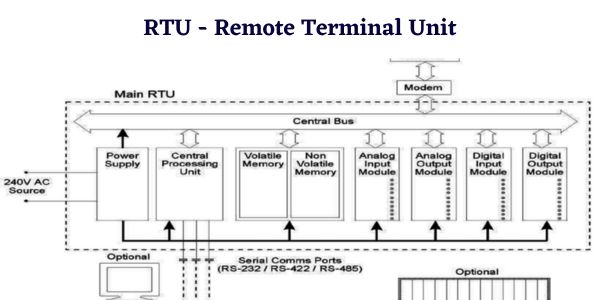
Main parts of an RTU
| Block | What it does | Typical specification |
|---|---|---|
| CPU module | Runs the scan cycle, protocol stacks, local logic and diagnostics | 32-bit ARM or similar, 200-1000 MHz, real-time OS or embedded Linux, 128 MB to 1 GB memory, real-time clock with supercapacitor backup |
| Analogue input (AI) | Reads continuous measurements: current, voltage, pressure, level, flow, temperature | 4-20 mA or ±10 V, 12 to 16-bit ADC, 8 or 16 channels per card, 2.5 kV channel-to-ground isolation |
| Digital / status input (DI) | Reads on-off states: breaker open or closed, valve position, trip flags, door contacts | Dry contact or 24/48/110 V DC wetting, 16 to 32 channels, 1 ms SOE resolution, optical isolation |
| Analogue output (AO) | Sends a setpoint to a positioner, drive or governor | 4-20 mA, 12-bit, 2 to 8 channels |
| Digital / control output (DO) | Operates the plant through relay or transistor contacts | Latching or momentary relay, 5 A at 250 V AC, select-before-operate with a 5-30 s timeout |
| Counter / pulse input | Totalises energy and flow pulses without CPU involvement | 32-bit counters, up to a few kHz |
| Communication ports | Links upstream to the master and downstream to IEDs | 2 to 8 ports: RS-232, RS-485, 10/100 Ethernet, fibre SC/ST, plus 4G or radio modem |
| Power supply | Feeds the RTU and field loops, and rides through supply dips | 24, 48, 110 or 220 V DC input from the station battery, or 230 V AC with an integral charger and sealed battery for 8-24 h backup |
| Enclosure | Protects the electronics in an outdoor kiosk | IP54 to IP66 cubicle, DIN rail mounting, -40 to +70 °C operation, surge protection on every field entry |
Modern units are modular: a backplane with a CPU and a mix of I/O cards, so a 32-point site and a 300-point site use the same product family. Fixed or “compact” RTUs with a soldered I/O count are cheaper and common on small water and gas sites.
RTU communication protocols
Protocol support is the first thing to check on a datasheet, because a utility will already have standardised on one.
- Modbus RTU and Modbus TCP. Simple register-based polling, published by Modicon in 1979 and still everywhere. Modbus RTU means the binary serial framing mode over RS-485, not the hardware device, which causes real confusion. It has no time-stamping and no unsolicited reporting, so it is mostly used downstream to meters and drives.
- DNP3 (Distributed Network Protocol 3), standardised as IEEE 1815. Carries time-stamped events, report by exception (the RTU speaks up when something changes rather than waiting to be polled), data classes 0 to 3, and Secure Authentication v5.
- IEC 60870-5-101. The serial telecontrol standard used by European and Indian utilities over radio and leased lines, with balanced or unbalanced link mode and time-tagged information objects.
- IEC 60870-5-104. The same application layer as 101 carried over TCP/IP, on port 2404. This is the usual RTU-to-master protocol in Indian distribution SCADA projects.
- IEC 61850. Substation automation over Ethernet using GOOSE and MMS. A modern substation RTU often acts as a gateway, collecting IEC 61850 from the bay IEDs and publishing IEC 60870-5-104 to the control centre.
- MQTT and OPC UA. Used where telemetry has to reach a cloud historian or an analytics platform.
RTU vs PLC: what is the difference?
Short verdict: use an RTU when the sites are far apart, unmanned and linked by a slow or unreliable network; use a PLC when the machinery is local, fast and needs deterministic control. The two overlap heavily now, but they were designed for different problems.
| Feature | RTU (Remote Terminal Unit) | PLC (Programmable Logic Controller) |
|---|---|---|
| Designed for | Telemetry and supervisory control over distance | Fast local control of a machine or process line |
| Typical site | Unmanned: substation, pump house, wellhead, RMU kiosk | Manned plant: factory floor, treatment works, control panel |
| Distance to master | Kilometres to hundreds of kilometres | Metres, within one plant network |
| Scan / response time | Tens of milliseconds; the comms link is the bottleneck | 1-10 ms cycle, deterministic |
| Native protocols | DNP3, IEC 60870-5-101/104, IEC 61850, Modbus | Modbus, Profibus, Profinet, EtherNet/IP, EtherCAT |
| Time-stamping | Built in, 1 ms SOE with GPS or IRIG-B sync | Usually not native; needs an add-on module |
| Report by exception | Yes, core to DNP3 and IEC 60870-5 | No, the master polls or the PLC pushes on a fixed cycle |
| Store and forward | Yes, buffers data through comms outages | Rarely |
| Programming | Configuration tables, point lists, some IEC 61131-3 | IEC 61131-3 ladder, FBD, ST, SFC as the main job |
| Power | DC from station battery or solar, low draw (5-25 W) | Mostly 230 V AC mains |
| Environment | -40 to +70 °C, no cooling, surge hardened | 0 to +55 °C, usually a ventilated panel |
| Analogue / loop control | Basic; the master does the heavy logic | Strong PID and motion control |
| Cost per point | Higher; you pay for comms, isolation and hardening | Lower for the same I/O count |
Three differences matter most in practice. Time: the RTU stamps events at source to 1 ms, so a fault sequence across fifty substations can be reconstructed afterwards, while a PLC reports whenever the master gets round to asking. Tolerance of a bad link: an RTU assumes the network will drop and is built around that. Power and temperature: an RTU has to run off a battery in a roadside kiosk in Nagpur in May, which rules out most standard PLC hardware.
The line is blurring. Many vendors now sell a programmable RTU that runs IEC 61131-3 logic and speaks DNP3 at the same time. Judge the product by its datasheet, not its name.
Where RTUs are used in India
Power distribution. Distribution SCADA built under the Restructured Accelerated Power Development and Reforms Programme and its successors, including the Revamped Distribution Sector Scheme launched in 2021, is the largest single RTU deployment in the country. Each 33/11 kV substation in a scheme town gets a substation RTU, and feeder RTUs (FRTUs) sit on ring main units and sectionalisers out on the 11 kV network. They report breaker status, load current, bus voltage and fault passage indication over IEC 60870-5-104 to the discom control centre, which is what makes automated fault location, isolation and supply restoration possible.
Transmission. State and regional load despatch centres collect line flows, frequency and breaker status from substation RTUs and gateways, which is what real-time grid balancing runs on.
Water and wastewater. City water SCADA schemes, including work under AMRUT, put an RTU at each borewell, overhead tank, booster station and treatment plant. Typical points are pump run status, motor current, sump level, chlorine residual, flow totaliser and pressure. These sites often run on solar with 4G backhaul because mains supply is unreliable.
Oil, gas and railways. Cross-country pipelines use solar-powered RTUs at sectionalising valve stations every 15 to 30 km, reporting pressure and valve position and accepting emergency shutdown commands. Traction substations follow the same pattern of unmanned site plus telemetry link.
How to select an RTU
- Count your points, then add 30%. List AI, DI, AO, DO and counters separately. Spare capacity is far cheaper at tender stage than a second cubicle later.
- Fix the upstream protocol first. If the control centre runs IEC 60870-5-104, the RTU must do 104 natively, with SOE and time sync, not through a bolted-on converter.
- Check the downstream protocol list against the meters, relays and drives you already own.
- Match the power source. A 110 V DC substation battery, a 48 V DC telecom battery and a 12/24 V solar supply each need a different module. Check the burden in watts against the solar sizing.
- Confirm the environmental rating: operating temperature, IP rating, and surge withstand to IEC 61000-4-5 for outdoor sites.
- Insist on 1 ms SOE and an external time source (GPS, IRIG-B or SNTP). Without it, post-fault analysis is guesswork.
- Look at security and buffer depth. DNP3 Secure Authentication or IEC 62351, role-based logins, no default passwords, an audit log, and enough memory to hold events for the longest expected outage.
- Plan for maintenance: hot-swappable I/O cards, remote firmware update, and spares for the 15 to 20 year life of the asset.
A tip for students heading into utility jobs: learn to read a point list and an IEC 60870-5-104 ASDU dump. Most RTU commissioning problems are not hardware faults, they are mismatched information object addresses between the RTU database and the master station database.
References
- IEEE – IEEE 1815 (DNP3) and related SCADA standards.
- IEC 60870-5-101 and IEC 60870-5-104, Telecontrol equipment and systems, International Electrotechnical Commission.
- IEC 61850, Communication networks and systems for power utility automation.
- Central Electricity Authority and Ministry of Power documentation on distribution SCADA under RDSS.
FAQs
What is the full form of RTU?
In SCADA and industrial automation, RTU is the full form of Remote Terminal Unit, a field device that collects sensor data and executes control commands from a master station. In an education context in Rajasthan, the same letters stand for Rajasthan Technical University.
What is the difference between an RTU and a PLC?
An RTU is built for telemetry from remote, unmanned sites over slow or unreliable links, with 1 ms event time-stamping, report by exception, data buffering and wide-temperature DC operation. A PLC is built for fast, deterministic control of local machinery with a 1-10 ms scan and strong PID logic. Use an RTU for distributed networks and a PLC for plant machinery.
What protocols does an RTU use?
Upstream to the SCADA master, the common protocols are DNP3 (IEEE 1815), IEC 60870-5-101 over serial and IEC 60870-5-104 over TCP/IP port 2404. Downstream to meters, relays and drives, RTUs usually use Modbus RTU or Modbus TCP, and IEC 61850 in modern substations.
What are the main components of an RTU?
A CPU module, analogue input cards, digital status input cards, analogue and digital output cards, counter inputs, communication ports (RS-232, RS-485, Ethernet, fibre or a 4G radio), a DC power supply with battery backup, and a surge-protected enclosure rated for outdoor use.
Is an RTU the same as Modbus RTU?
No. A Remote Terminal Unit is a physical device. Modbus RTU is a transmission mode of the Modbus protocol that uses compact binary framing over a serial line such as RS-485, as opposed to Modbus ASCII or Modbus TCP. An RTU device commonly speaks Modbus RTU, but the two terms mean different things.
Related Topics on EngineeringHulk
Keep reading
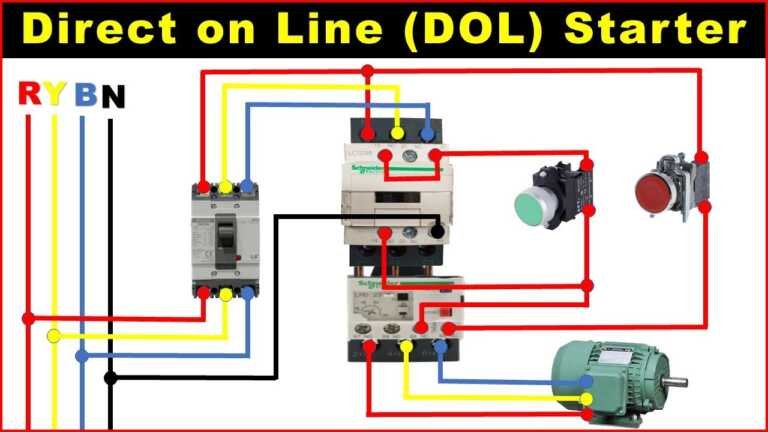
DOL Starter (Direct-On-Line Motor Starter): Working, Parts and Uses
A DOL (direct-on-line) starter connects an induction motor to full voltage in one step. Parts, working, starting current, DOL vs star-delta, pros and cons.
MCB Full Form: Miniature Circuit Breaker Working, Parts and Trip Curves
MCB full form is Miniature Circuit Breaker. How it trips on overload and short circuit, its parts, B, C and D curves, ratings and how to pick one.
Spring Constant: Definition, Formula, SI Unit and Examples
The spring constant k is the force per unit extension of a spring (k = F/x). Its SI unit is N/m. Formula, dimensions, series and parallel springs, and examples.

Lathe Machine Parts and Their Functions
Lathe machine parts and functions: bed, headstock, chuck, tailstock, carriage, apron, feed rod and lead screw, plus a parts table and worked examples.

Components of the Internal Combustion Engine (IC Engine): Parts, Functions and Materials
Main components of an IC engine with function and material of each: block, head, piston, rings, connecting rod, crankshaft, valves, plus worked examples.
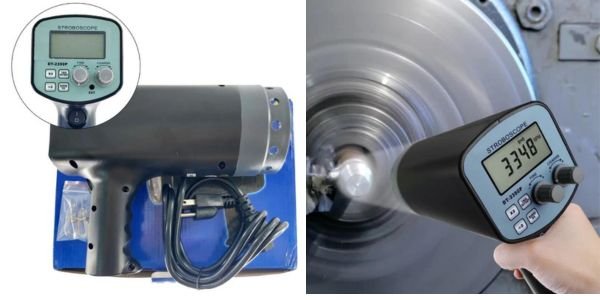
Stroboscope: Working Principle, RPM Measurement, Types and Uses
How does a stroboscope work? Flashes at the rotation rate freeze motion. Working principle, RPM method, the harmonic trap, worked example, types, uses.