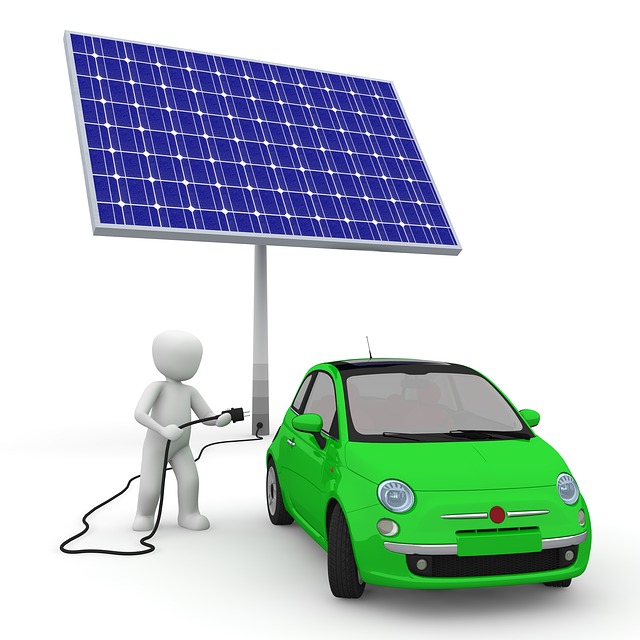
There are three main types of solar panels: monocrystalline, polycrystalline and thin-film. Monocrystalline panels are the most efficient (typically about 20-24% for commercial modules in 2026) and are now the default choice for rooftops. Polycrystalline panels are cheaper per panel but less efficient (about 15-18%) and are being phased out. Thin-film panels are light and flexible but need more area per kilowatt, except for cadmium telluride, which is used mainly in large solar farms.
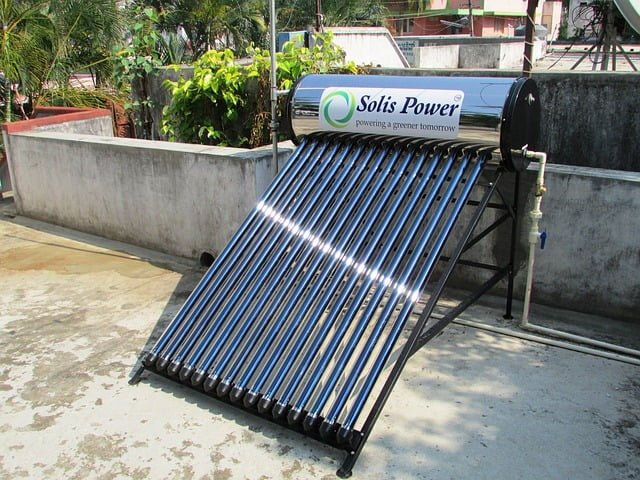
How a solar panel works
A solar panel is a set of photovoltaic (PV) cells wired together and sealed under glass. Each cell is a p-n junction made of a semiconductor, usually silicon. When sunlight hits the cell, photons knock electrons loose; the electric field at the junction pushes them one way, and they flow out through the metal contacts as direct current (DC). This is the photovoltaic effect, first observed by Edmond Becquerel in 1839. The first practical silicon solar cell was made at Bell Labs in 1954, with about 6% efficiency.
A single silicon cell gives roughly 0.5-0.7 V. Modules connect 60, 72 or (with half-cut cells) 120 or 144 cells in series to reach useful voltages. An inverter then converts the DC to 230 V AC for home use.
Types of solar panels compared
| Type | Typical module efficiency (2026) | Look | Relative cost | Best for |
|---|---|---|---|---|
| Monocrystalline (PERC) | About 20-22% | Uniform black | Medium | Homes, rooftops; being replaced by TOPCon |
| Monocrystalline (TOPCon, HJT, back-contact) | About 22-24%+ | Uniform black | Medium to high | Rooftops with limited space, new projects |
| Polycrystalline | About 15-18% | Blue, speckled | Low per panel | Older and budget installations |
| Thin-film: cadmium telluride (CdTe) | About 18-20% | Dark, uniform | Low per watt at utility scale | Large ground-mounted solar farms |
| Thin-film: CIGS | About 13-17% | Black, can be flexible | Medium | Flexible and building-integrated panels |
| Thin-film: amorphous silicon (a-Si) | About 6-9% | Brown/black film | Low | Calculators, small devices, some flexible panels |
Efficiency figures are typical ranges for commercial modules; individual products vary, so read the datasheet.
1. Monocrystalline solar panels
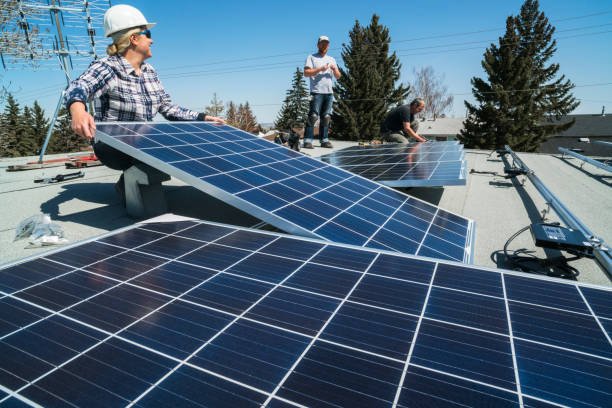
Each cell is cut from a single continuous crystal of silicon, grown as a cylindrical ingot by the Czochralski method and sliced into thin wafers. Because the crystal has no grain boundaries, electrons move more freely and efficiency is higher. The cells look uniformly black.
Within monocrystalline, the cell technology matters more than the name:
- PERC (Passivated Emitter and Rear Cell): adds a reflective, passivated layer at the back. It was the mainstream technology until recently.
- TOPCon (Tunnel Oxide Passivated Contact): an ultra-thin oxide layer reduces losses at the contacts. It has largely taken over from PERC in new production.
- HJT (Heterojunction): thin amorphous silicon layers on a crystalline wafer. High efficiency and better performance in heat.
- Back-contact: all metal contacts on the back, so no shading on the front; among the most efficient commercial panels.
Pros: highest efficiency, so fewer panels for the same roof; good lifespan (25-30 year performance warranties are common); lower degradation. Cons: higher cost per panel than poly; efficiency drops somewhat in high heat, as with all silicon panels.
2. Polycrystalline solar panels
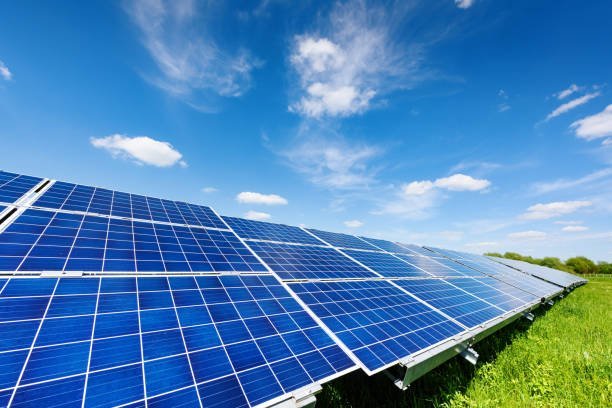
Molten silicon is poured into a mould and cooled into a block made of many small crystals, which is then sliced into square wafers. The grain boundaries between crystals trap some electrons, so efficiency is lower. The cells have a blue, flaky look.
Pros: simpler, cheaper manufacturing and less silicon waste. Cons: lower efficiency means more roof area per kilowatt; slightly worse in heat. As monocrystalline prices fell, poly lost its cost advantage, and most manufacturers have stopped making it.
3. Thin-film solar panels
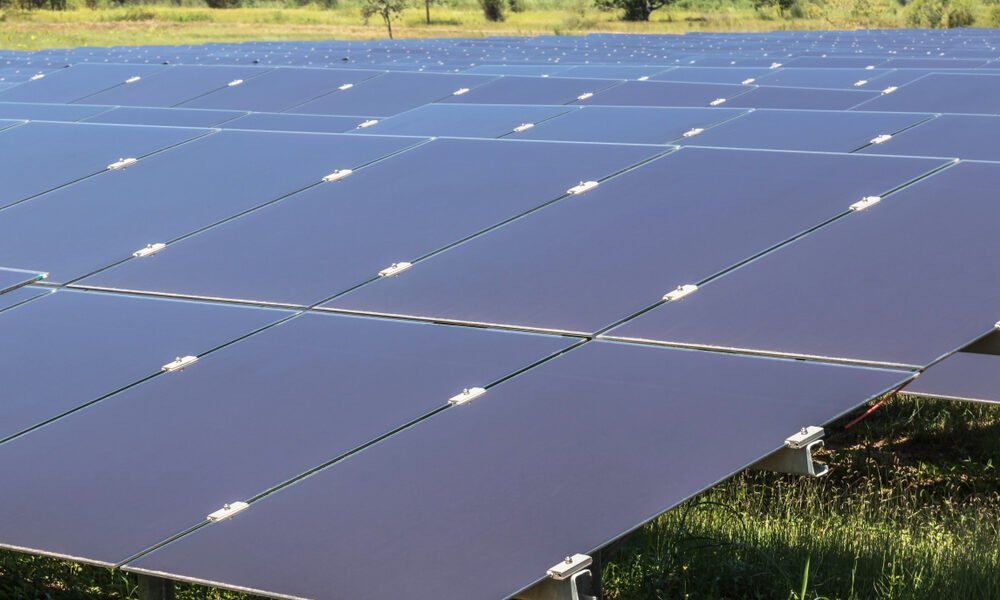
Instead of thick wafers, a layer of light-absorbing material only a few micrometres thick is deposited on glass, metal or plastic. The three main materials are cadmium telluride (CdTe), copper indium gallium selenide (CIGS) and amorphous silicon (a-Si).
Pros: lightweight, can be flexible, cope better with heat and partial shade, and use far less material. Cons: most types are less efficient, so they need more area; CdTe contains cadmium, which requires controlled recycling at end of life. CdTe is competitive mainly in large solar farms, while a-Si and CIGS suit curved surfaces, vehicles and portable panels.
Other panel designs you will see
- Bifacial panels: cells that collect light on both sides, with glass on the back. On a raised mount over a light-coloured surface, they can produce roughly 5-20% more energy than the same panel with a solid back.
- Half-cut cell panels: each cell is cut in two, which lowers current in each string, reduces resistive losses and limits the effect of partial shading.
- Perovskite and tandem cells: perovskite layers stacked on silicon have passed 34% efficiency in laboratory cells. Long-term stability is still being proven, so they are not yet mainstream.
Research on nanomaterials such as semiconductor quantum dots also aims at future, cheaper solar cells.
Worked example: sizing a 3 kW rooftop system
A typical modern monocrystalline module is rated 550 W and measures about 2.278 m × 1.134 m.
- Module area = 2.278 × 1.134 ≈ 2.58 m².
- Efficiency = rated power ÷ (1,000 W/m² standard sunlight × area) = 550 ÷ (1,000 × 2.58) ≈ 21.3%.
- For a 3 kW system: 3,000 ÷ 550 = 5.45, so use 6 modules (3.3 kW).
- Panel area = 6 × 2.58 ≈ 15.5 m²; allow roughly 25-30 m² of shadow-free roof for spacing and walkways.
Across most of India, a well-installed system produces roughly 4 to 4.5 kWh per kW of panels per day on average across the year. So 3.3 kW gives about 13-15 kWh a day, or roughly 400-450 units a month, before losses for dust and heat. With 16%-efficient poly panels, the same 3.3 kW would need about a third more roof area.
Which type of solar panel should you buy?
| Situation | Recommended type |
|---|---|
| Home rooftop in India | Monocrystalline TOPCon or similar, from an ALMM-listed manufacturer |
| Small or partly shaded roof | High-efficiency monocrystalline with half-cut cells; consider microinverters or optimisers |
| Ground-mounted system over light soil or a white roof | Bifacial monocrystalline |
| Large utility solar farm | Bifacial mono or CdTe thin-film |
| Curved surface, van, boat or portable use | Flexible thin-film (CIGS or a-Si) or flexible mono |
For Indian homes (2026): the PM Surya Ghar: Muft Bijli Yojana central subsidy is ₹30,000 for 1 kW, ₹60,000 for 2 kW and a maximum of ₹78,000 for 3 kW and above, and it requires domestically made (DCR) modules. From 1 June 2026, panels for subsidised and net-metered projects must also use cells from manufacturers on MNRE’s ALMM List-II. Check the current rules on the official PM Surya Ghar portal before you buy, as they change.
Solar is a renewable source; see renewable vs non-renewable resources for how it compares with coal and gas.
FAQs
What are the three main types of solar panels?
Monocrystalline, polycrystalline and thin-film. Monocrystalline is the most efficient and most common today.
Which type of solar panel is best for home use?
Monocrystalline, preferably a newer cell technology such as TOPCon or HJT. It produces the most power from a limited roof.
What is the difference between monocrystalline and polycrystalline panels?
Monocrystalline cells are cut from a single silicon crystal, are black and reach about 20-24% efficiency. Polycrystalline cells are made from many crystals, look blue and reach about 15-18%.
How long do solar panels last?
Most crystalline panels come with 25-30 year performance warranties and keep producing for longer, typically losing around 0.4-0.8% of their output per year.
Are thin-film solar panels good?
They are good for large solar farms (CdTe) and for flexible or lightweight uses, but most types need more area than monocrystalline panels for the same power.