EngineeringHulk
  • Home
  • General
  • Manufacturing Engineering
  • Automobile Engineering
  • Universities and Colleges
  • Thermodynamics
  • Contact us
  • Home
  • General
  • Manufacturing Engineering
  • Automobile Engineering
  • Universities and Colleges
  • Thermodynamics
  • Contact us
  1. Home
  2. ›
  3. Manufacturing Engineering
  4. ›
  5. Material Removal Techniques in Manufacturing Process
Manufacturing Engineering

Material Removal Techniques in Manufacturing Process

Dr. Jennifer Russel
January 8, 2022
3 min read
Material Removal Techniques in Manufacturing Process

There are several material removal techniques that are performed using different machine tools. There are wide ranges of cutting tool materials that are used by machine tools. The different material removal techniques involved are:

• Material removal with single point metal cutting tool.

• Use of multipoint metal cutting tool for material removal.

• Abrasives as a cutting tool.

• Ultrasonic machining.

• Electrochemical machining.

• Electro discharge machining.

• Laser beam machining.

• Plasma machining.

Different machine tools have different applicability depending on the material that can be machined. The efficiency of different machine tools has increased with numerical control. However, for the operation of some machine tools, a special machining environment is required.

The machine using numerical control and the machine tools with different control systems do not differ in the actual cutting process, given that in both cases the same material removal technique is employed. This is because the numbering control is just a technique of controlling the operation of the machine tool and is not a machine tool.

The efficiency of the machining operation is improved by feeding information related to the cutting process to a control unit which can then control the relative movement between the tool and the workpiece. However, in some cases of machine tools, the numerical system cannot be linked directly to the actual cutting process.

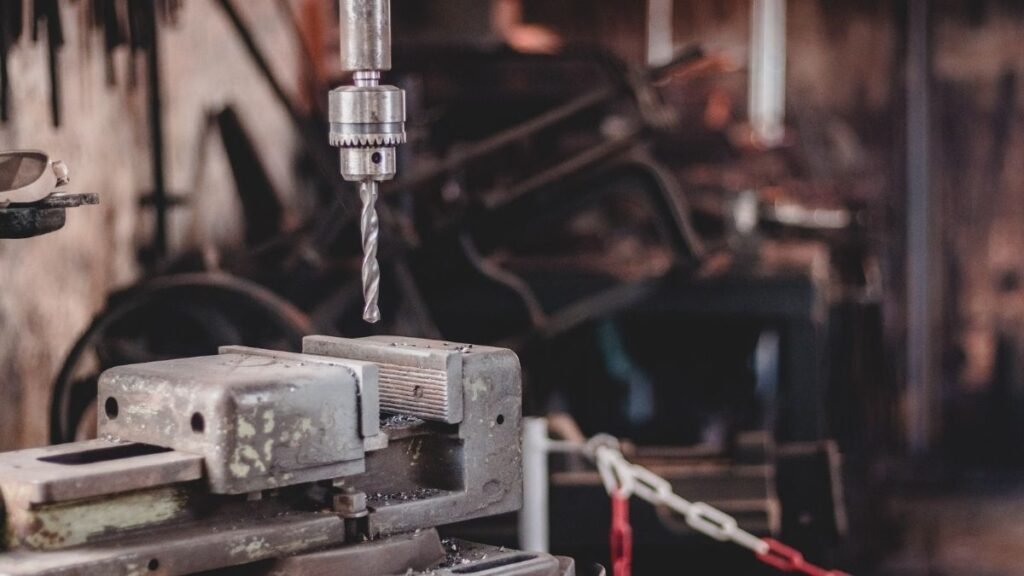
The tool or workpiece is mounted on a table. The amount of table movement, the direction of movement and the rate at which the table must be moved is precisely and precisely controlled through a numerical control mechanism.
engineering hulk

THE Numerical control also controls the other features of a machine, such as the selection of the proper cutting tool by turning the cutting fluid flow on and off and spindle speed selection. This helps in the production of products with greater accuracy and precision. Numerical control allows for a wide range of applications.

These include control plotters, oxyacetylene flame cutting machines, tower presses, inspection equipment, robot measurement and control equipment. The relative movements between the tool and the workpiece determine the type of geometry produced in the part. The three different kinematic principles used for producing the necessary geometry in a machine tool are generation, copying and forming.

The relative movement of the tool in relation to the part produces the desired shape on the workpiece. The principle of generation encompasses the production of the part parameters. The parameters are typically the solid of revolution and a straight line. These are the two main components and their combinations that make up the required shape of the component.

It is usually recommended to use these shapes as it would be difficult to control the relative position tool and workpiece movement. However, many other ways can be used with the use of numerical control techniques. For example, the generation of a cylinder occurs through a combination of circles and straight lines. There are four different ways to use this combination to generate a cylinder. One of these methods involves rotating the tool and its movement.

This method is normally used in the case of the smaller tool in relation to the workpiece. A similar technique is also adopted by vertical boring and boring machines. The second method involves rotating the workpiece with its axis movement. The method is suitable in cases where the dimensions of the workpiece are smaller than the tool. The example includes cylindrical grinding. Other the cylinder generation method involves the rotational movement of the tool and the axial axis part movement.

Tags: metal removal process
Share: Twitter LinkedIn

Author

Dr. Jennifer Russel

You Might Also Like

McMaster Carr: A must know marketplace
Manufacturing Engineering

McMaster Carr: A must know marketplace

Introduction McMaster-Carr is a renowned industrial supply company that has been serving the needs of businesses and professionals since its…

Dr. Jennifer RusselJun 7, 20245 min read
Read →
General Engineering Tolerances: Types, Methods & More
Manufacturing Engineering

General Engineering Tolerances: Types, Methods & More

In engineering and manufacturing, the concept of tolerances is paramount to ensuring components fit and function properly. At its core,…

Dr. Jennifer RusselSep 13, 20235 min read
Read →
Electrical Discharge Machining (EDM): Types, Working & More
Manufacturing Engineering

Electrical Discharge Machining (EDM): Types, Working & More

Electrical Discharge Machining, or EDM for short, is a non-traditional machining process that utilizes electrical sparks to remove material from…

Dr. Jennifer RusselSep 13, 20237 min read
Read →

5 Comments

  1. Partially Oriented Yarn (POY) – Detailed Overview September 20, 2023

    […] Modern manufacturing techniques ensure that POY has consistent properties, which is crucial for the next stages of yarn […]

  2. ISO Standards: Certification, Attributes and Challenges September 13, 2023

    […] standards cover a vast range of industries, from technology and manufacturing to food safety and healthcare. But what exactly are these standards? Why are they so important? […]

  3. Abrasive jet machining – Detailed Information 2023 August 2, 2023

    […] the workpiece, the kinetic energy of the abrasive particles erodes the material on the surface. The material removal takes place due to the abrasive action of the particles against the workpiece. Softer areas are […]

  4. What is Computer Numerical Control (CNC)? July 19, 2023

    […] which stands for Computer Numerical Control, is an automation technology utilized in the manufacturing industry. It involves the use of computers to control machine tools. CNC machines are capable of […]

  5. Ultrasonic Machining Process working in manufacturing August 17, 2022

    […] machining is a subtractive manufacturing process that removes material from the surface of a part through low-amplitude, high-frequency vibrations […]

Leave a Comment

Your email address will not be published. Required fields are marked *

Recent Posts

  • Reverse Image Search featured image
    Complete Guide to Reverse Image Search in 2026
    Dec 31, 2025
  • Image Search Techniques
    Image Search Techniques: Tools, Tips & AI Visual Search Guide
    Dec 30, 2025
  • EMS Sculpting Machine
    Is the EMS Sculpting Machine Good for Your Skin?
    Nov 25, 2025
  • titanium
    The Go-To Material for Longevity in a Landscape of Planned Obsolescence
    Sep 28, 2025
  • fafsa
    Free Application for Federal Student Aid (FAFSA)
    Sep 27, 2025

Topics

  • General 335
  • Manufacturing Engineering 91
  • Computer Engineering 41
  • Automobile Engineering 30
  • Renewable sources of Energy 26
  • Universities and Colleges 26
  • Scholarships 22
  • Thermodynamics 17
  • Module 2 10
  • Module 1 10

Newsletter

Stay Updated

Get the latest engineering articles delivered to your inbox.

Subscribe Free

Tags

geothermal energy engineering notes Biogas generation plants RES notes welding cnc Reverse Image Search Benson boilers boiler Deep Neural Networks neural network Data Annotation Tech Vision Pro Apple what is Apple Vision Pro Apple Vision Pro cost apple vision pro price Apple Vision Pro pipe bender machine pipe bender Tube Bender Machine
EngineeringHulk

Practical engineering knowledge, tutorials, and insights for builders, makers, and technical professionals.

Topics

  • General
  • Manufacturing Engineering
  • Computer Engineering
  • Automobile Engineering
  • Renewable sources of Energy
  • Universities and Colleges

Resources

  • Tutorials
  • Tools
  • Calculators
  • RSS Feed
  • Sitemap

Company

  • About Us
  • Contact
  • Write For Us
  • Advertise
  • Privacy Policy

© 2026 EngineeringHulk. All rights reserved. Built with passion for engineering.

Privacy Terms Sitemap